


Arthouse Cinema Blu-ray: The Collector’s Guide to Boutique Film Editions (2026)
- Martin Kolb
- Apr 13
- 13 min read

Updated: Apr 15
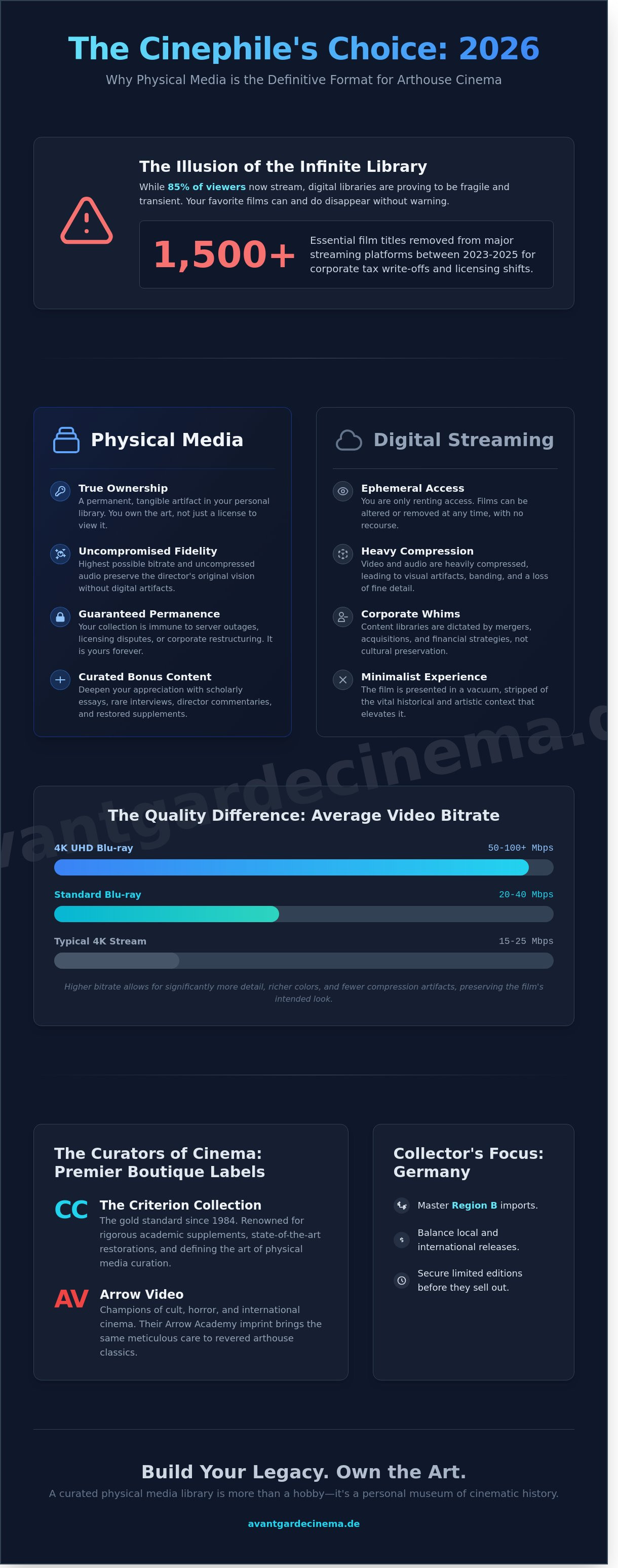
While 85% of global viewers have migrated to digital streaming, the true soul of film preservation now lives exclusively on the physical shelf. You likely feel the frustration when a favorite masterpiece vanishes from a platform overnight or suffers from visible compression artifacts. Owning an arthouse cinema blu-ray isn't just about media storage; it's a commitment to artistic integrity and the tactile joy of cinematic history. You understand that a film is a vision that requires the highest technical fidelity to truly breathe.
We've designed this 2026 collector’s guide to help you curate a world-class library by mastering the nuances of boutique labels like Criterion and Second Sight. You'll discover how to bypass the common hurdles of Region B imports in Germany and secure limited editions before they disappear into the secondary market. From analyzing 4K restoration standards to identifying the finest physical packaging, we provide the expert roadmap you need to transform a simple hobby into a curated gallery of vision and light.
Key Takeaways
Understand why the uncompromising aesthetic vision of arthouse cinema requires the superior bitrates and permanence of physical media over digital streaming platforms.
Identify the gold standards of cinematic curation by navigating the unique restoration philosophies and premium supplements of premier boutique labels.
Master technical specifications, from 4K UHD standards to original negative scans, to ensure your arthouse cinema blu-ray collection represents the pinnacle of visual excellence.
Navigate the complexities of the German market by learning how to strategically balance local releases with international imports and manage region-code compatibility.
Develop a sophisticated curation strategy that identifies rare out-of-print editions to preserve both the artistic integrity and long-term value of your library.
Table of Contents Defining Arthouse Cinema in the Age of Physical Media The Essential Boutique Labels Shaping Modern Arthouse Collections The Anatomy of a Premium Release: 4K UHD, Supplements, and Packaging Strategic Collecting: Building an Arthouse Library in Germany Elevating the Experience: The Avant-Garde-Cinema Curation Strategy
Defining Arthouse Cinema in the Age of Physical Media
Arthouse cinema isn't just a category of film. It's a commitment to the singular, often uncompromising vision of a creator. While commercial blockbusters prioritize predictable formulas and mass-market appeal, Defining Arthouse Cinema requires looking at works that challenge social norms and prioritize aesthetic integrity over profit. In 2026, the arthouse cinema blu-ray serves as the definitive vessel for these visions. Collectors understand that a digital stream is merely a temporary license, whereas a physical disc represents a permanent piece of cultural history.
Digital platforms operate on a model of transience that fails the serious cinephile. Licensing agreements expire, and titles vanish without warning. Between 2023 and 2025, major streaming services removed over 1,500 titles from their libraries to facilitate tax write-offs, leaving viewers without access to essential works. A boutique physical edition preserves the director's intent through high-bitrate transfers and uncompressed audio that streaming algorithms can't replicate. We've entered a golden age where boutique labels utilize advanced restoration tools to clean 35mm and 70mm negatives with precision that surpasses original theatrical projections.
The Arthouse Philosophy: Film as Fine Art
Arthouse films function as avant-garde storytelling, requiring a medium that respects their complexity. When you engage with the art of physical media collecting, you aren't just buying a disc. You're acquiring a curated artifact complete with historical essays, rare interviews, and scholarly commentary. This context transforms a simple screening into an educational immersion. It treats the film as a piece of fine art rather than a disposable commodity—a standard of aesthetic care also provided by First4Frames Gallery for collectors looking to display their visual art with professional precision.
Physical vs. Digital: The Preservation Argument
The shift from ownership to licensing is the greatest threat to our cinematic heritage. Digital libraries are fragile and subject to the whims of corporate restructuring. A physical library serves as a personal museum, immune to server outages or internet connectivity issues. By 2026, the distinction between "watching" a film and "owning" its legacy has never been clearer. Holding a high-quality arthouse cinema blu-ray ensures that a masterpiece remains accessible for decades, regardless of which streaming platform survives the next merger. It's about securing your own history and building a collection that reflects your individual aesthetic values.
The Essential Boutique Labels Shaping Modern Arthouse Collections
The curation of an arthouse cinema blu-ray collection is a deliberate act of cultural preservation. It's a rejection of the ephemeral nature of streaming services, where titles vanish without warning. In 2026, physical media serves as a tangible archive of human emotion and visual innovation. These boutique labels don't just distribute discs; they curate legacies through meticulous restoration and scholarly contextualization. Every spine on a shelf represents a commitment to aesthetic excellence and the enduring power of the moving image.
The "Big Three" of Arthouse Boutique
The Criterion Collection remains the definitive architect of the boutique movement. Since its first laserdisc release in 1984, the label has maintained a rigorous standard for technical and academic excellence. Their mission involves treating every film as a masterpiece, regardless of its commercial origins. You can explore The Criterion Collection to understand how their signature supplements and high-bitrate transfers transform a simple viewing into a comprehensive masterclass. Their library is the backbone of any serious collection.
Arrow Video offers a compelling counterpoint by bridging the gap between cult aesthetics and high-brow art. While they established their reputation through 1970s genre cinema, their Arrow Academy line focuses on the restoration of European and Japanese classics. Collectors often find that owning these editions is about Elevating the Experience of home viewing to match the sanctity of the world's most prestigious cinematheques. Their 2026 catalog continues to push the boundaries of what a "cult" film can be, often uncovering forgotten gems of the French New Wave.
Eureka! Masters of Cinema has been an essential pillar for collectors since its inception in 2004. They specialize in the foundations of the medium, providing definitive versions of silent masterpieces like Metropolis and the complete works of masters like Kenji Mizoguchi. Their dedication to original aspect ratios and archival-quality encodes ensures that the history of cinema remains vivid and accessible for future generations.
Emerging Experimental Labels
The landscape is constantly shifting as new curators enter the frame. Radiance Films, founded in 2022 by industry veteran Fran Simeoni, has quickly become a vital source for obscure world cinema. Their focus on aesthetic consistency and rare titles from Italy, Japan, and Brazil makes them a favorite for those seeking the avant-garde. They prioritize films that have never seen a digital release, filling crucial gaps in the history of global film.
Vinegar Syndrome, once known primarily for "genre" restorations, has expanded its vision through its Cinematograph sub-label. This initiative treats experimental and independent films with the same reverence usually reserved for major studio classics. It's this intersection of the high and the low that defines the modern arthouse cinema blu-ray market. Finding your specific niche within this world is a journey of discovery that begins with the right curator.
Explore our full list of Boutique Studios to find your niche and begin building a library that reflects your personal curatorial vision. You might find your next obsession among our latest new releases.
The Anatomy of a Premium Release: 4K UHD, Supplements, and Packaging
A high-end arthouse cinema blu-ray is more than a storage medium; it's a curated artifact that bridges the gap between the theater and the private gallery. Collectors in 2026 demand a level of precision that honors the original vision of the filmmaker. This requires a synthesis of cutting-edge digital restoration and physical craftsmanship. When you hold a boutique edition, you're holding years of archival labor and artistic curation. It's a testament to the fact that cinema is meant to be owned and studied, not just streamed and forgotten.
Technical Excellence: The 4K Revolution
The transition from standard high definition to 4K Ultra HD represents the most significant leap in home cinema history. A 4K scan from the original 35mm negative provides four times the resolution of a standard 1080p disc, capturing the minute textures of skin, fabric, and light. High Dynamic Range (HDR) and Dolby Vision are the true stars here. These technologies allow for a broader color palette and deeper contrast ratios, ensuring that the neon-soaked streets of a noir classic or the muted pastels of a French New Wave masterpiece appear exactly as the cinematographer intended. Browse our latest 4K Ultra HD releases for the ultimate visual experience.
Authenticity in restoration also means respecting the film's organic DNA. Boutique labels now avoid aggressive Digital Noise Reduction (DNR). They understand that film grain is a feature, not a bug. A "clean" image often looks waxy and lifeless, whereas a properly managed 4K transfer preserves the organic flicker and grit of celluloid. This commitment to filmic texture is what separates a generic studio dump from a true arthouse cinema blu-ray masterwork. It's about seeing the film as it looked on its premiere night in 1962 or 1975.
The Tactile Experience: Packaging and Limited Editions
Physical media thrives because it's tangible. In an era of ephemeral digital files, Limited Edition Box Sets become instant collector items because they offer a permanent connection to the art. These sets often feature custom illustrations, rigid slipcases, and specialized finishes like spot gloss or metallic foil. The packaging isn't just a shell; it's an extension of the film's aesthetic identity. It signals that the content inside is valuable and worthy of protection.
The Art of the Booklet: Many premium releases include perfect-bound books featuring 40 to 100 pages of scholarly analysis. These essays provide historical context that enriches the viewing experience, turning a simple movie night into an academic deep dive—a commitment to textual depth also shared by Plume Charmers in their bilingual editions of ancient works.
Curated Supplements: Audio commentaries and video essays act as a masterclass in film theory. A 2025 survey of boutique buyers showed that 82 percent of collectors consider the quality of "extras" a primary deciding factor in their purchase.
Shelf Presence: Steelbooks and thick Scanavo cases turn a movie collection into a personal library, reflecting the owner's sophisticated taste and dedication to the medium.
The value of these editions lies in their permanence. Every supplement and every design choice is a deliberate act of preservation. When a label commissions a new cover or restores a lost scene, they're ensuring that the film remains a living, breathing piece of culture. These releases don't just occupy space on a shelf; they command attention and invite repeated exploration.
Strategic Collecting: Building an Arthouse Library in Germany
Collectors in Germany occupy a unique position within the global film community. The domestic market provides access to some of the world's most meticulously restored editions, yet the pursuit of a definitive arthouse cinema blu-ray collection often necessitates a sophisticated approach to international sourcing. Building a library isn't just about accumulation; it's an act of curation that requires balancing technical compatibility with aesthetic integrity.
Region Codes and Compatibility
Technical barriers shouldn't dictate your artistic tastes. Standard Blu-ray discs are typically restricted by geographical region codes: Region A for the Americas and East Asia, Region B for Europe and Africa, and Region C for the rest of Asia. For a German collector, this often means that a coveted edition from a US boutique label won't play on a standard European machine. However, the landscape shifted in 2016 with the arrival of 4K UHD. This format is almost universally region-free, making it the primary tool for the modern cinephile. If you're still navigating the complexities of legacy formats, you can find detailed technical setup advice in The Cinephile’s Guide to Import Blu-rays to ensure your hardware matches your passion.
The German Collector’s Advantage
Germany is home to boutique labels that rival the world's best. Labels like Camera Obscura, founded in 2008, or Bildstörung, have set high standards for technical precision and packaging design. One specific challenge in the local market is the FSK rating system. Since 2009, large age-rating stickers have been mandatory on covers, which can disrupt the visual harmony of a carefully designed sleeve. Most high-end German boutique releases solve this by including a "Wendecover" or reversible sleeve, allowing you to display the artwork without the rating logo.
Purchasing from domestic specialists offers more than just convenience. It's a strategic move to avoid the 19% import VAT and the additional handling fees that often accompany shipments from the US or UK. By focusing on local distributors, you can often find significant Deals on rare and out-of-print editions that have vanished from the international market. Curating by director is another effective strategy; focusing on the complete filmography of a visionary like Wim Wenders or Rainer Werner Fassbinder allows you to see the evolution of their visual language across several decades of work.
A library is a reflection of your personal vision. Whether you're hunting for a specific arthouse cinema blu-ray or building a thematic collection based on 1970s New German Cinema, the key is consistency. High-quality editions preserve the director's intent and ensure that the cinematic experience remains as vivid as it was on the day of its premiere.
Explore our curated selection of masterpieces and start your next collection today:
Elevating the Experience: The Avant-Garde-Cinema Curation Strategy
True cinephilia transcends the act of simply watching a film; it involves the meticulous assembly of a personal archive that mirrors the history of visual storytelling. Our approach to selecting inventory for the arthouse cinema blu-ray market isn't dictated by mass-market algorithms or retail trends. Instead, we function as a digital cinematheque. We prioritize editions that offer more than just a movie, focusing on those that provide scholarly context, restored visual integrity, and tactile beauty. Every title in our collection undergoes a rigorous vetting process to ensure it meets the standards of a community that values grain structure over digital smoothing and original mono tracks over artificial remixes.
A critical component of this strategy involves the constant monitoring of "Out of Print" (OOP) cycles. In the boutique market, rights agreements are often ephemeral. Data from 2025 indicates that approximately 18% of limited edition arthouse releases sold out within the first 90 days of their street date. This scarcity transforms certain discs into modern relics. We actively track these shifts to help collectors secure essential works before they migrate to the secondary market at inflated prices. You can monitor these disappearing treasures through our Out of Print selection to ensure your library remains complete.
Expertise serves as our foundation. When you engage with our team, you aren't talking to a logistics department; you're connecting with individuals who can discuss the nuances of a 4K restoration of a 1960s French New Wave classic. This shared passion ensures that the support we provide is both technically accurate and artistically informed. As we look ahead, 2026 promises to be a landmark year for the arthouse cinema blu-ray format, with rumored comprehensive box sets from directors like Edward Yang and updated 4K restorations of early silent masterpieces finally reaching the boutique market.
The Curator’s Vision
Our mission focuses on bridging the geographical divide that often separates German fans from international boutique labels. We source elusive editions from global powerhouses like Criterion, Second Sight, and Vinegar Syndrome, handling the complexities of importation so you don't have to. We believe that a masterpiece shouldn't be inaccessible due to a shipping border. To stay ahead of the next wave of cinematic excellence, we invite you to check our Coming Soon section for the next masterpiece arriving in our warehouse.
Join the Avant-Garde Community
We understand that for a collector, the condition of a slipcover is as vital as the disc itself. Our shipping protocol utilizes collector-grade packaging designed to withstand the rigors of transit, ensuring your limited editions arrive in pristine condition. We manage pre-orders with surgical precision to guarantee that our community members never miss a low-print-run release. Explore all New Releases to start your next cinematic journey and experience a level of service defined by professional integrity and a deep love for the moving image.
Curating Your Cinematic Legacy for 2026 and Beyond
Building a collection isn't just about acquiring discs; it's a deliberate act of cultural preservation. The industry-wide shift toward 4K UHD 2160p restorations ensures that the visionary works of legendary directors remain vibrant on modern displays. Boutique labels like Criterion, Radiance, and Second Sight have set a high bar for physical media in 2026, offering tactile experiences through limited edition booklets and archival supplements. Owning an arthouse cinema blu-ray represents a commitment to the craft of filmmaking and the integrity of the director's original vision.
Finding the right editions requires a partner who understands the nuances of film history and the fragility of physical media. We specialize in high-end boutique labels and maintain an extensive inventory of rare, Out-of-Print editions that are often lost to time. Every order is handled with the precision collectors expect, utilizing safe shipping methods designed to protect premium packaging from any transit damage. It's time to elevate your home library with selections that transcend the ordinary and provide lasting value.
Your home library is a living testament to the power of the moving image. Start shaping your vision today and let these masterpieces inspire your own creative journey.
Frequently Asked Questions
What is the best boutique label for arthouse cinema?
The Criterion Collection remains the premier boutique label, having curated a library of over 1,000 significant films since its inception in 1984. Their commitment to technical excellence and scholarly supplements sets the industry benchmark for collectors. Other vital contributors include the UK based Second Run, which focuses on Eastern European masterpieces, and Arbelos, known for their stunning 4K restorations of Hungarian classics.
Are 4K Ultra HD Blu-rays region-free for German players?
Nearly all 4K Ultra HD Blu-ray discs are region-free and will play on any German 4K player without restriction. The Blu-ray Disc Association established this global standard in 2016 to ensure hardware compatibility across all 195 countries. You can safely import a 4K disc from the United States or Japan and expect it to function perfectly on your European equipment.
What makes a Blu-ray "boutique" compared to a standard release?
A boutique arthouse cinema blu-ray distinguishes itself through meticulous curation and physical artistry that standard studio releases rarely provide. These editions often feature 80-page perfect-bound booklets, newly commissioned cover illustrations, and exclusive video essays. While a standard disc might only offer a theatrical trailer, a boutique release typically provides several hours of archival interviews and academic commentary.
Why are some arthouse Blu-rays so expensive?
High prices reflect the intensive labor required for frame-by-frame digital restoration and the licensing fees paid to international film estates. Restoring a single 90-minute feature from a damaged 35mm negative can cost upwards of $50,000. These labels also produce smaller print runs of 2,000 to 5,000 units, which significantly increases the per-unit manufacturing cost compared to mass-market titles.
How do I know if a Blu-ray is a limited edition?
You'll identify a limited edition by the presence of a unique serial number or a "First Pressing" sticker on the slipcase. Labels like Indicator or Vinegar Syndrome typically print 3,000 copies of their deluxe box sets before they transition to a standard edition that lacks the original booklet. Always check the spine or the back cover for specific production numbers to confirm the rarity of the release.
Can I play US Criterion Blu-rays on a German player?
Standard US Criterion Blu-rays are locked to Region A and won't play on standard German hardware, which is locked to Region B. To view these discs, you'll need a region-free player or a specific hardware modification. Data shows that roughly 95% of Criterion's standard Blu-ray catalog remains region-locked, though their 4K Ultra HD titles are a notable exception to this rule.
What is the difference between a 2K and a 4K restoration?
A 4K restoration captures four times the visual detail of a 2K scan by utilizing a resolution of 3840 x 2160 pixels. This higher pixel density allows the arthouse cinema blu-ray to preserve the organic grain and fine texture of the original film stock. While a 2K scan is sufficient for standard 1080p displays, a 4K scan provides the essential data needed for modern High Dynamic Range (HDR) grading.
Comments