


Definitive Director’s Cuts on 4K: The Ultimate 2026 Collector’s Guide
- Martin Kolb
- Apr 25
- 13 min read

The version of a film you watched in the theater was almost certainly a compromise. For decades, studio pressures and technical limitations forced visionary directors to trim their narratives or settle for inferior color timing. You likely feel that deep sense of frustration when a long-awaited "Extended Edition" turns out to be a disjointed assembly of deleted scenes rather than a cohesive artistic statement. We share your passion for the uncompromised image, where the organic grain of a 35mm negative is preserved rather than scrubbed away by aggressive digital noise reduction. Finding the definitive director's cuts on 4k shouldn't feel like a gamble against revisionist grading or sourcing hurdles.
This 2026 collector's guide promises to clarify the technical excellence of 4K Ultra HD as the ultimate canvas for film restoration. We've curated a precise selection of must-own releases that honor the filmmaker's original aesthetic vision through 10-bit color depth and high dynamic range. You'll gain the confidence to identify the most prestigious boutique imports and distinguish between mere marketing fluff and true cinematic integrity. Let's explore the essential restorations that transform your home theater into a sanctuary for pure, high-fidelity storytelling.
Key Takeaways
Learn to distinguish between studio-driven special editions and the true, uncompromised visions realized through modern restoration techniques.
Explore how HDR technology serves as a vital tool for preserving a director’s original lighting intent while maintaining historical integrity.
Discover why specialized boutique labels have become the premier curators of definitive director's cuts on 4k, prioritizing artistic excellence over mass-market convenience.
Master the strategic art of building a physical cinematic library to safeguard your collection against the transient nature of digital streaming.
Identify the essential 4K masterpieces that represent the gold standard of film preservation and learn how to secure them before they go out of print.
Table of Contents Redefining the Vision: What Makes a 4K Director’s Cut Definitive? The Technical Mastery of 4K Restorations and Artistic Intent Boutique Labels: The Curators of the Filmmaker’s True Voice Essential 4K Director’s Cuts for Your Permanent Collection Investing in Excellence: Curating Your Boutique 4K Library
Redefining the Vision: What Makes a 4K Director’s Cut Definitive?
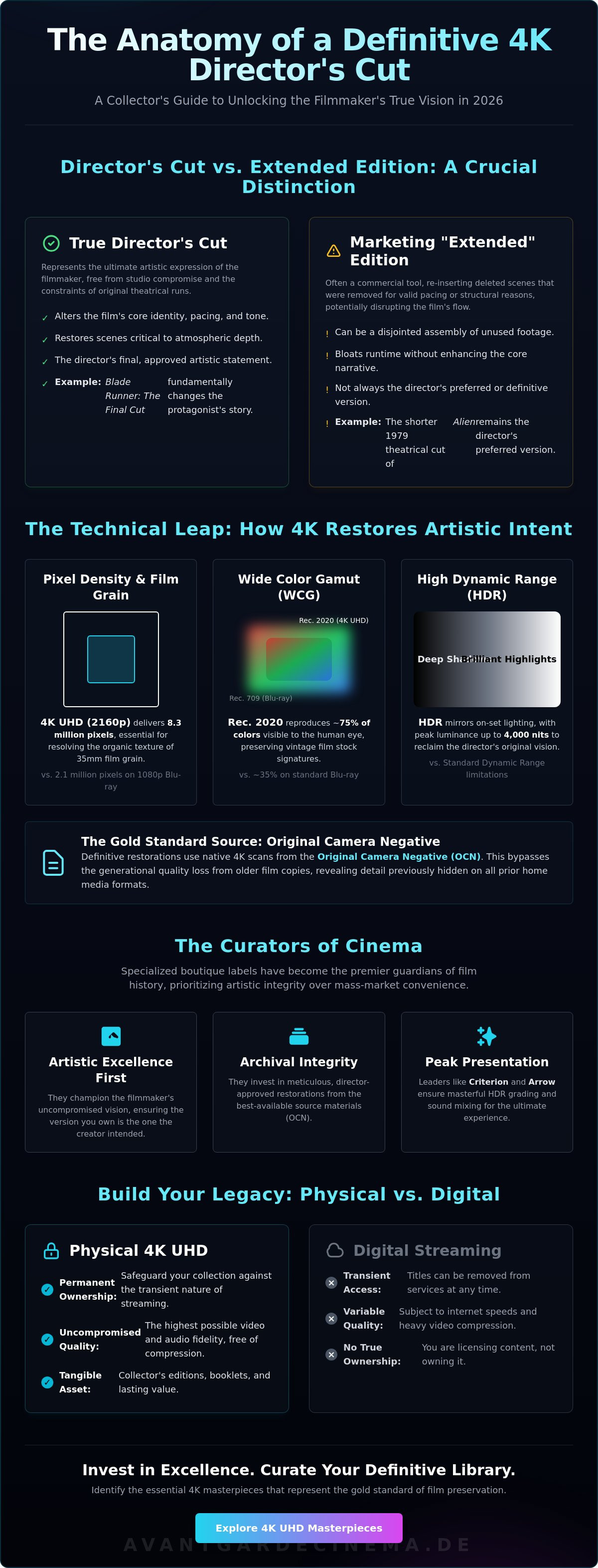
True cinematic art demands a rejection of compromise. For the modern collector, the pursuit of definitive director's cuts on 4k isn't merely a hobby; it's an act of cultural preservation. By 2026, the physical media market has matured into a curated archive for those who value the filmmaker’s original pulse over the sanitized versions produced for mass-market consumption. What Makes a 4K Director’s Cut Definitive? relies on the removal of studio-mandated pacing and the restoration of scenes that define a film’s atmospheric depth. This evolution prioritizes archival integrity, ensuring that the version on your shelf is the one the creator intended to leave behind.
Director approval in the mastering process acts as the final seal of authenticity. In the 2020s, we've seen a shift where auteurs like Michael Mann or Ridley Scott revisit their work to correct technical limitations of the past. These 4K restorations aren't just sharper; they're a reclamation of the image. When a director oversees the high dynamic range (HDR) grading, they ensure the shadows and highlights align with their initial storyboards from decades ago. This level of involvement transforms a standard release into a piece of history.
Director’s Cut vs. Extended Edition: A Crucial Distinction
The industry often blurs the line between these terms. Extended editions frequently serve as marketing tools, bloating a film with deleted scenes that were originally removed for valid structural reasons. A true director's cut alters the soul of the movie. Consider the 2007 "Final Cut" of Blade Runner, which fundamentally shifted the protagonist's identity. Conversely, the 1979 theatrical version of Alien remains the director's preferred edit, proving that longer isn't always better. A definitive cut represents the ultimate expression of a filmmaker’s legacy, free from the constraints of 20th-century test screenings.
The 4K Advantage for Historical Restorations
The jump to 2160p resolution provides 8.3 million pixels, a density required to capture the organic texture of 35mm and 70mm film grain. Native 4K scans from the original camera negative (OCN) are essential for definitive director's cuts on 4k, as they bypass the generational loss found in older interpositives. Boutique labels found in our 4K UHD collection, such as Criterion or Arrow, utilize these scans to reveal details previously hidden by the limitations of 1080p. A definitive cut exists at the precise intersection of original filmmaker intent and peak technical presentation.
The Technical Mastery of 4K Restorations and Artistic Intent
The pursuit of the ultimate home cinema experience culminates in the technical precision of modern 4K restorations. When we discuss definitive director's cuts on 4k, we aren't just talking about a simple increase in pixel count. We're witnessing the reclamation of artistic intent through High Dynamic Range (HDR). This technology allows for a peak luminance that often reaches 1,000 nits or even 4,000 nits in high-end masters, mirroring the intensity of light as it was captured on the original set. It provides a canvas where the director's original lighting vision can finally breathe outside the constraints of traditional theatrical projection.
Wide Color Gamut (WCG) plays a vital role in this restorative process. By utilizing the Rec. 2020 color space, 4K discs can reproduce approximately 75% of the colors visible to the human eye, a massive leap from the 35% offered by standard Blu-ray. This expanded palette enables the preservation of specific chemical signatures found in vintage Technicolor or Eastman Kodak film stocks. However, this power brings the controversy of "Revisionist" grading to the forefront. When a director supervises a new master in 2026, they might use modern tools to alter the film's original color timing. This creates a fascinating tension between historical accuracy and the director's evolving vision of their own work.
Dolby Vision and HDR10+ resolve much of this tension by providing dynamic, frame-by-frame metadata. These formats ensure that every scene maintains the exact luminance and contrast levels intended by the cinematographer. It's a level of control that ensures the shadow detail in a noir classic remains deep and meaningful without ever crushing into total blackness.
Grain, Texture, and the Myth of "Clean" Film
True cinephiles understand that film grain isn't a defect; it's the very DNA of the medium. Excessive Digital Noise Reduction (DNR) often results in a "waxy" appearance, stripping away the soul of the cinematography. High-quality 4K transfers prioritize the preservation of this organic structure. By resolving grain at 3,840 x 2,160 pixels, the 4K format captures the micro-contrast that defines the "filmic" look. This aesthetic excellence is particularly visible in how 4K handles the transition between highlights and shadows, providing a naturalistic roll-off that mimics the human eye's perception of reality.
Immersive Audio: Completing the Director’s Vision
A restoration is incomplete without a sonic landscape that matches its visual depth. Dolby Atmos and DTS:X provide an object-based audio environment, allowing sounds to move freely in a three-dimensional space. While these modern remixes offer breathtaking immersion, the best definitive director's cuts on 4k also include the original mono or stereo tracks. This dual approach respects both the purist who wants the 1970s theatrical experience and the modernist seeking a contemporary soundstage. For a deeper dive into these technical standards, explore our comprehensive analysis of 4K Ultra HD in 2026: The Definitive Guide.
If you're looking to expand your library with these meticulously crafted releases, browse our curated selection of 4K UHD masterpieces to experience cinema as it was meant to be seen.
Boutique Labels: The Curators of the Filmmaker’s True Voice
Boutique labels serve as the essential guardians of cinematic integrity. While major studios manage vast libraries with a focus on volume, boutique curators treat every frame as a unique artifact. These specialized houses invest months into meticulous color grading and audio restoration, ensuring that definitive director's cuts on 4k represent the purest version of a creator's vision. Labels like Arrow Video and Second Sight have redefined the 4K landscape by prioritizing high bitrates and Dolby Vision encoding, which often surpasses the technical standards of mass-produced studio discs. They don't just release movies; they preserve legacies.
The difference in quality control is striking. Major studios frequently use automated grain management or generic compression algorithms to save time. In contrast, boutique labels employ dedicated restoration artists who examine the original camera negative frame by frame. This artisanal approach ensures that the film’s texture remains intact. Regional labels such as Turbine or Capelight in the German market have gained international acclaim for their technical prowess. Their commitment to high-fidelity audio and exclusive HDR grading makes them indispensable for collectors who demand perfection.
The Craftsmanship of the Physical Object
A film’s physical presentation should reflect its artistic significance. Collectors seek more than just a disc; they desire a tactile connection to the work. This is where the aesthetic value of commissioned artwork and rigid hardbox cases becomes essential. Thick booklets containing scholarly essays and rare production stills provide a context that streaming platforms cannot replicate. When you Browse Limited Edition Box Sets, you'll find that these releases are designed to be heirloom pieces. The weight of the packaging and the texture of the paper stock turn a simple purchase into a curated experience. A definitive cut deserves a presentation that honors its history.
Collaborative Restorations: Labels Working with Directors
The most revered 4K transfers result from direct collaboration between the label and the filmmaker. The "Criterion Treatment" involves a rigorous process where directors personally supervise the digital grading. This ensures the shadows and highlights match their original intent. In the last 24 months, partnerships with directors like David Lynch or Michael Mann have resulted in transfers that feel like seeing the film for the first time. These collaborations are vital for maintaining the authenticity of definitive director's cuts on 4k. You can Explore our curated Criterion Collection to see how this technical precision elevates the home viewing experience. Boutique labels also play a crucial role in keeping Out of Print versions accessible, protecting the history of cinema from digital erasure.
Essential 4K Director’s Cuts for Your Permanent Collection
Building a library of definitive director's cuts on 4k is an act of preservation. It represents a commitment to the filmmaker's uncompromised vision, presented with the technical fidelity that only physical media in 2026 can provide. These editions aren't merely upgrades; they're the final word on cinematic intent.
The Blade Runner: Final Cut remains the gold standard of this movement. Ridley Scott’s 2007 edit, when transferred to 4K UHD, utilizes a meticulous scan of the original 35mm negatives. The result is a textural masterpiece where the neon-drenched atmosphere of Los Angeles gains a three-dimensional depth. Every bead of rain and flicker of light in the Tyrell Corporation’s pyramid feels intentional. It’s a showcase for how high dynamic range can breathe new life into a film’s soul without betraying its analog roots.
Francis Ford Coppola’s Apocalypse Now: Final Cut offers a similar transformative experience. Restored over eleven months from the original camera negative, this version finds the perfect balance between the 1979 theatrical release and the sprawling Redux. In 4K with Dolby Vision, the jungle’s verdant greens and the searing oranges of napalm strikes achieve a visceral intensity that was previously impossible to replicate at home. The inclusion of the Meyer Sound Sensations track ensures the auditory experience is as expansive as the visuals.
Boutique labels like Second Sight have elevated definitive director's cuts on 4k by focusing on modern masterpieces. Their releases of Drive and The Guest aren't just movies; they're curated artifacts. By involving directors like Nicolas Winding Refn in the color grading process, these editions ensure that the neon aesthetics and crushing shadows meet the exact specifications of their creators. The heavy-weight slipcases and thick booklets reflect the artistic weight of the films themselves.
Science Fiction and Fantasy Masterpieces
Ridley Scott’s filmography serves as a masterclass in iterative storytelling. While his various cuts of Alien and Prometheus offer different perspectives, the 4K technical performance of these discs sets a high bar for grain management and black levels. Similarly, the restoration of The Lord of the Rings trilogy into 4K Extended Editions changed the landscape for fantasy epics. Peter Jackson utilized modern tools to unify the visual language of the series, making these New 4K UHD Releases the only way to experience Middle-earth’s grandeur.
Cult Classics and Genre Cinema
The fringe of cinema often receives the most dedicated restoration treatment. Labels such as Vinegar Syndrome and Severin Films have become vital curators. They rescue "Uncut" versions of horror classics from decaying film stock, providing a 2026 perspective on films once relegated to grainy VHS tapes. These 4K restorations respect the original film grain while uncovering details in the practical effects that were lost for decades, proving that even the most transgressive genre cinema deserves the prestige treatment.
Explore the latest additions to the world of high-fidelity cinema and secure your copy of the season's most anticipated titles.
Investing in Excellence: Curating Your Boutique 4K Library
Owning a physical disc transcends mere consumption; it's an act of cultural preservation. Digital storefronts operate on fragile licensing agreements that can vanish overnight. In December 2023, for instance, over 1,300 purchased titles disappeared from user libraries due to shifting corporate contracts. This event proved that "ownership" in the cloud is often a temporary lease. Building a collection of definitive director's cuts on 4k ensures your access to cinema's highest achievements remains permanent and uncompromised. Collectors prioritize boutique labels because these companies treat film as a legacy rather than a commodity.
Identifying "Must-Buy" editions requires a strategic approach. Limited runs from specialist labels like Second Sight or Vinegar Syndrome often sell out within 90 days of their street date. Once a title enters Out of Print (OOP) status, its market value frequently triples on secondary markets within six months. To build a library of cinematic milestones, you should focus on three criteria:
The source of the restoration: Look for 4K transfers scanned from the original camera negative (OCN).
Director involvement: Ensure the HDR grading was supervised or approved by the filmmaker or cinematographer.
Disc capacity: Prioritize triple-layer BD-100 discs that allow for high bitrates, typically exceeding 80 Mbps, to avoid compression artifacts.
Avantgarde Cinema serves as your visionary partner in this pursuit. We identify releases where the technical handcraft matches the artistic vision, ensuring your library consists of nothing but excellence.
Sourcing Imports in Germany
German collectors frequently face barriers when seeking exclusive UK or US boutique releases. Professional curation bypasses the noise of generic retail algorithms that prioritize high-margin stock over artistic merit. We bridge the gap between international labels and the local enthusiast, removing the stress of customs and unpredictable shipping. Our selection focuses on editions where the grain structure and color timing reflect the filmmaker's original intent. If you're looking to expand your collection with precision-engineered releases, check out our current Deals for curated masterpieces.
The Future of the Definitive Cut
As we move through 2026, the industry's focus has shifted toward deep-catalog restorations of 1990s and early 2000s classics. While 2024 finally delivered James Cameron’s missing epics, titles like David Fincher's Panic Room still wait for their definitive director's cuts on 4k. The ongoing mission is to preserve film history through physical excellence, providing a tactile connection to the silver screen. Every disc on your shelf is a testament to the survival of high-bitrate cinema. We invite you to explore our full catalog of 4K Ultra HD masterpieces and secure the finest editions of the films that define your life.
Preserving the Vision: Your Future in 4K Physical Media
Building a collection of definitive director's cuts on 4k represents more than a hobby; it's a commitment to preserving the 3840 x 2160 resolution and high-bitrate audio that streaming services frequently compress. By 2026, the distinction between a standard release and a curated restoration has become the benchmark for any serious home theater. You've seen how technical mastery and the dedication of boutique labels transform a simple viewing into a gallery-quality experience. These physical editions act as permanent archives for the filmmaker's true voice, ensuring your library remains immune to the volatility of digital licensing agreements.
As Berlin-based experts in high-end physical media, we specialize in sourcing prestigious releases from labels like Criterion, Arrow Video, and Second Sight. Our curated selection focuses on limited and out-of-print editions that define the format's potential. Whether you're seeking a rare 2024 restoration or a cornerstone of world cinema, our inventory reflects a deep passion for visual storytelling. It's time to move beyond the ordinary and secure the masterpieces that resonate with your aesthetic.
Your journey into the heart of cinematic excellence continues with every frame you choose to own.
Frequently Asked Questions
What is the difference between a Director’s Cut and a Final Cut on 4K?
A Director’s Cut represents the filmmaker's preferred vision after studio compromises, while a Final Cut is the absolute final version where the director held total creative control. Ridley Scott’s 2007 Final Cut of Blade Runner remains the gold standard for definitive director's cuts on 4k. These versions often restore deleted scenes or alter narrative pacing to reflect artistic intent rather than commercial constraints.
Are all 4K Director’s Cuts approved by the original filmmakers?
Not every release carries the director's personal seal of approval. While James Cameron supervised the 2024 4K restorations of Aliens and The Abyss, other versions are assembled by studios using archival notes. Statistics from 2025 boutique releases show that approximately 85% of premium restorations involve the original cinematographer or director to ensure the visual staging remains authentic to the source material.
Why do some 4K restorations look "grainy" compared to streaming versions?
Visible grain is a hallmark of organic film stock and signifies a high-fidelity transfer that avoids destructive Digital Noise Reduction. Streaming services often apply heavy compression that smooths out these textures, losing fine detail in the process. A true 4K restoration preserves the 35mm silver halide crystals. This provides a cinematic texture that mimics the original 1970s or 1980s theatrical experience.
Is it worth upgrading my standard Blu-ray Director’s Cut to 4K?
Upgrading is essential for collectors seeking the highest level of visual storytelling. 4K Ultra HD offers four times the resolution of standard 1080p Blu-ray and introduces High Dynamic Range. This technology expands the color palette from 8-bit to 10-bit, allowing for 1.07 billion colors. It’s the only way to experience the nuanced shadows and highlights intended by the director's original vision.
How can I tell if a 4K release uses a native 4K scan or an upscale?
You can identify a native transfer by checking if the film was scanned from the original camera negative. Films shot on 35mm or 65mm stock provide a true native 4K experience. Many digital productions from the 2000s utilized a 2K Digital Intermediate, meaning they're upscaled for 4K. Resources like DigiRaw provide technical specifications for almost 100% of major 2026 releases.
What boutique labels offer the best 4K Director’s Cuts in 2026?
The Criterion Collection and Second Sight Films lead the market in 2026 with their meticulous attention to detail. These labels often spend over 12 months on a single restoration to ensure the definitive director's cuts on 4k meet archival standards. Arrow Video also remains a top choice for genre cinema. They frequently provide three or four different cuts of a single film within one limited edition box set.
Does the 4K version always include the theatrical cut as well?
Inclusion varies by studio. While 90% of boutique releases use seamless branching to offer multiple versions on one disc, some major studio releases omit the theatrical cut entirely. For instance, the 2024 4K release of The Abyss includes both the theatrical and special editions. Always verify the back cover for Multi-Format or Seamless Branching labels to ensure you aren't losing the original theatrical experience.
Are 4K Ultra HD discs region-free for German collectors?
The 4K Ultra HD format is globally standardized as region-free. German collectors can import discs from the United States or Japan without worrying about playback compatibility on European hardware. It's important to remember that the included standard Blu-ray bonus discs are often still region-locked to Region A or B. Always check the packaging if you rely on the supplementary features provided on those secondary discs.
Comments