


Is 4K Blu-ray Worth It Over Streaming? The Cinephile’s 2026 Verdict
- Martin Kolb
- Apr 26
- 12 min read

In a year where over 15 percent of digital film libraries have seen licensed titles vanish without warning, the illusion of permanent digital ownership has finally shattered. You have likely felt that specific sting of disappointment when a meticulously graded shadow in a noir masterpiece dissolves into a muddy mess of pixelated artifacts on your high-end display. It's a betrayal of the craft when your premium audio system is fed a thin, compressed signal that lacks the visceral resonance of a true theatrical performance. You find yourself wondering: is 4k blu-ray worth it over streaming when convenience seems to be the only metric that matters to mass-market providers?
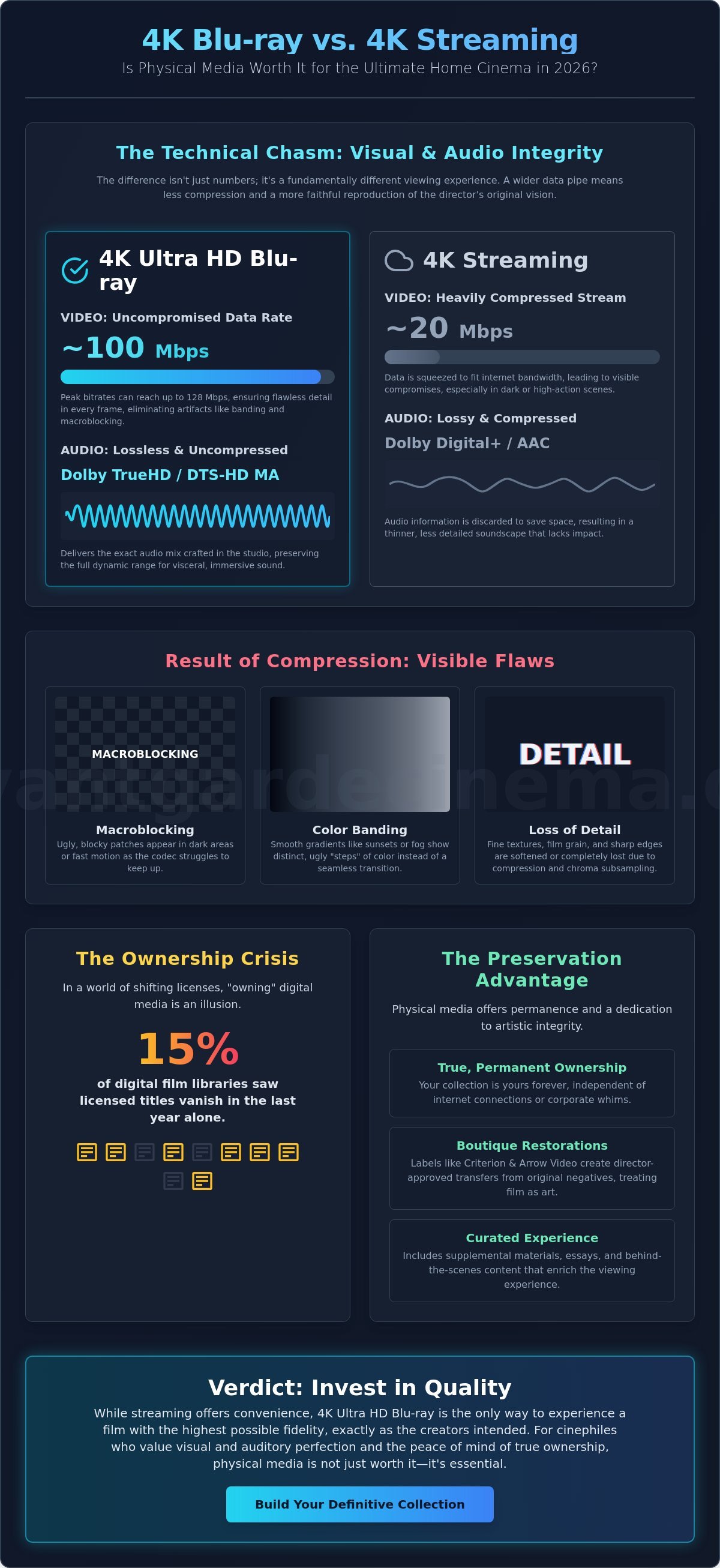
We agree that your passion for visual storytelling deserves better than the compromise of a 20 Mbps stream. This guide serves as your manifesto for aesthetic excellence, proving why physical media remains the only way to honor a director's original vision in 2026. You'll discover the technical "why" behind the 100 Mbps bitrate advantage and the philosophical peace of mind that comes with truly owning your cinema. We're also highlighting the essential new restorations that transform your home into a sanctuary of light and sound, ensuring your investment in quality is finally rewarded.
Key Takeaways
Examine the technical bitrate chasm and visual compression artifacts to finally answer: is 4k blu-ray worth it over streaming in a high-end home cinema environment?
Discover how boutique labels like Criterion and Arrow Video transform physical media into a form of artistic preservation through meticulous, director-approved 4K restorations.
Learn to distinguish between lossy streaming audio and the uncompressed power of Dolby TrueHD to reclaim the forgotten, high-fidelity half of the cinematic experience.
Understand the strategic importance of physical ownership in an era of "digital rot" and shifting licensing agreements that threaten the accessibility of film history.
Adopt a curated approach to your media library by identifying reference-quality titles that warrant the permanence and aesthetic prestige of a physical disc.
Table of Contents The Technical Chasm: Bitrate, Compression, and Visual Integrity Boutique Restorations: When Physical Media Becomes Art Lossless Audio: The Forgotten Half of the 4K Experience The Ownership Crisis: Physical Permanence in a Licensing World Verdict: When Should You Invest in 4K Blu-ray?
The Technical Chasm: Bitrate, Compression, and Visual Integrity
To understand why a physical disc remains the gold standard, you must look at the raw data flowing through your HDMI cable. While streaming services have made monumental leaps, they operate within the constraints of bandwidth efficiency. A standard 4K stream from a premium provider typically peaks at 15 to 25 Mbps. In contrast, the
allow for bitrates up to 128 Mbps. This isn't just a marginal difference; it's a technical chasm that defines the aesthetic limits of your home cinema. When data is squeezed to fit through a narrow internet pipe, the image suffers from compression artifacts. You'll often see macroblocking, those ugly square clusters, in dark shadows or fast-paced action sequences where the encoder can't keep up. For the discerning viewer, the question of
is 4k blu-ray worth it over streaming
is answered the moment a scene fades to black and remains ink-dark rather than dissolving into a pixelated mess. Chroma subsampling also plays a critical role here. This compression technique reduces color information to save space, often causing subtle color bleed in streaming content that ruins the sharp edges of a director's vision.
Why Bitrate is the Silent Hero of Home Cinema
The "data pipe" of a physical disc provides a consistent, high-velocity stream of information that even the fastest fiber-optic connections can't replicate with 100% stability. High bitrates are essential for eliminating "banding" in complex gradients. Think of a sunset or a foggy landscape in a film like *Dune*. On a stream, you might see distinct "steps" or rings in the sky. On a disc from our
, those transitions are silky and seamless. Physical media utilizes a more generous variable bitrate that allocates data exactly where it's needed, ensuring visual consistency that doesn't fluctuate when your neighbor starts a large download.
The HDR Advantage: Beyond Just Brightness
Boutique Restorations: When Physical Media Becomes Art
Streaming platforms often treat cinema as disposable content, delivered through algorithms that prioritize bandwidth efficiency over artistic integrity. In contrast, boutique labels view a film as a living piece of history. When asking is 4k blu-ray worth it over streaming, the answer often reveals itself in the meticulous care provided by specialized distributors. These labels transform a movie from a digital file into a definitive historical document. This dedication to the craft is why physical media remains the gold standard for those who value the director's original vision.
Entities such as Criterion and Arrow Video do not simply license a studio's existing master. They often initiate ground-up restorations, frequently collaborating with the original cinematographers or directors to supervise color grading. This ensures that the high dynamic range (HDR) application isn't just "bright," but accurate to the film's initial theatrical intent. For a deeper look at how these standards are evolving, explore our 4K Ultra HD in 2026 guide.
The Mastery of the Transfer
The technical gulf between a standard studio stream and a boutique 4K disc is immense. High-end labels utilize a 16-bit workflow during the scanning process, capturing a level of nuance in grain structure and shadow detail that streaming codecs simply discard. While a 4K stream might peak at 25 Mbps, a physical disc from Second Sight or Vinegar Syndrome consistently delivers bitrates between 80 and 100 Mbps. This massive data overhead eliminates macroblocking in dark scenes and preserves the organic "flicker" of 35mm film. For genre enthusiasts, these labels breathe new life into cult classics, uncovering textures that haven't been seen since the original negative was processed.
Curated Supplements and Context
A boutique release is often described as a "film school in a box." Beyond the visual excellence, the value proposition lies in the curation of context. These editions include scholarly audio commentaries, newly commissioned video essays, and thick printed booklets that analyze the film's cultural impact. They also serve as vital archives for alternative versions; boutique labels are known for including "lost" director's cuts or international edits that are never available on mainstream streaming services. This level of depth makes the physical purchase a long-term investment in cinematic education. You can find these comprehensive editions in our collection of specialized box sets, where every release is a tribute to the art of the moving image.
Lossless Audio: The Forgotten Half of the 4K Experience
While visual fidelity often takes center stage in home cinema discussions, the sonic landscape provides the emotional heartbeat of any cinematic work. If you're asking
is 4k blu-ray worth it over streaming
, the answer lies hidden within the auditory data. Streaming platforms like Netflix or Disney+ rely on Dolby Digital Plus, a lossy codec that discards approximately 90% of the original studio master's data to ensure smooth playback over standard internet connections. In contrast, 4K UHD discs utilize Dolby TrueHD and DTS-HD Master Audio. These formats are bit-for-bit clones of the theatrical mix, offering bitrates that can reach 18,000 kbps, dwarfing the 768 kbps ceiling found on most streaming services. The physical impact of Low-Frequency Effects (LFE) is where the difference becomes visceral. Streaming algorithms frequently apply dynamic compression, which flattens the peaks and raises the floor of a soundtrack, robbing a film of its "slam." On a disc, a sudden explosion or a subtle bass swell feels authoritative and precise because the hardware doesn't have to compromise on bandwidth. Deciding whether
is 4k blu-ray worth it over streaming
often comes down to how much you value the acoustic integrity of the filmmaker's original intent. Investing in a high-end sound system is a wasted endeavor if the source material remains the acoustic equivalent of a low-resolution thumbnail.
Dynamic Range and Soundstage
Modern sound mixing isn't about raw volume; it's about the distance between the quietest whisper and the loudest crescendo. This dynamic range allows the soundstage to breathe, creating a sense of three-dimensional space. Lossless audio on a 4K UHD disc preserves micro-details, like the rustle of leaves or the echo of footsteps in a distant hallway, that streaming codecs frequently erase. This spatial clarity ensures that dialogue remains sharp and intelligible, even during chaotic action sequences, without the need for constant volume adjustments.
The Immersive Power of Object-Based Audio
Streaming Dolby Atmos is often a "lite" version of the technology. Because of bandwidth constraints, streaming services use a spatial coding process that groups audio objects together to save space. A physical disc delivers "Full" Atmos, where dozens of discrete audio objects move independently through the room. This creates a cohesive bubble of sound that feels continuous and organic rather than fragmented. The result is a more convincing sense of presence that places the viewer directly inside the meticulously crafted vision of the director.
The Ownership Crisis: Physical Permanence in a Licensing World
Most viewers assume that clicking "buy" on a digital storefront grants them a permanent asset. It doesn't. You're merely paying for a long-term rental that survives at the whim of corporate mergers and licensing expirations. This fundamental fragility is why the question of whether is 4k blu-ray worth it over streaming has moved from a technical debate to a philosophical one. When servers go dark or contracts expire, your digital library can vanish instantly. Digital ownership is an illusion maintained by the convenience of the cloud.
The reality of "Digital Rot" became undeniable in December 2023, when Sony announced it would remove over 1,300 Discovery titles from user libraries due to licensing shifts. Even customers who paid full price for content found their access revoked. Physical media acts as an essential hedge against these server-side decisions and the unpredictable nature of internet connectivity. A 4K disc requires no handshake with a remote server to function. It offers a sovereign viewing experience that remains immune to outages or corporate disputes.
The Myth of the Digital Library
Digital storefronts operate under complex Terms of Service that prioritize the platform over the individual. These agreements usually specify that you're purchasing a non-transferable license to access content, not the content itself. When evaluating if is 4k blu-ray worth it over streaming, the preservation of non-mainstream and cult cinema remains a decisive factor. Why Physical Media Still Matters to Film Lovers becomes clear when platforms "vault" titles for tax write-offs or sensitivity edits. In contrast, Out of Print physical editions often appreciate in value, transforming a hobby into a curated archive of cinematic history that no algorithm can delete.
The Tactile Value of the Collection
The experience of cinema extends beyond the screen. It lives in the weight of the packaging and the intentionality of the choice. Selecting a film from a shelf is a ritual that honors the director's vision; it's an expression of artistic identity. Whether you're hunting for limited Steelbooks or comprehensive Box Sets, you're building a tangible legacy. This physical presence creates a connection that scrolling through a sterile interface can't replicate. Film collecting isn't just about storage. It's about preserving the soul of the medium through high-quality craftsmanship and deliberate curation.
Explore the curated selection of
and secure your personal archive today.
Verdict: When Should You Invest in 4K Blu-ray?
Deciding if is 4k blu-ray worth it over streaming depends entirely on your commitment to the director's original vision. For the casual viewer, the convenience of a subscription suffices for a Tuesday night comedy. For the cinephile, the disc remains the only way to experience uncompressed reality. You should invest in physical media when a film moves from being mere content to becoming a permanent part of your personal history. A "Streaming for Discovery, Disc for Preservation" strategy allows you to explore hundreds of titles online while securing the definitive versions of the films that define your aesthetic taste.
Building Your Reference Library
A true reference library prioritizes visual spectacles that push the limits of your hardware. Films shot on 35mm or 70mm, such as the 2023 restoration of The Red Shoes or the expansive vistas of Oppenheimer, benefit most from the 4K format. These transfers capture the chemical texture of the film stock with a precision that streaming algorithms simply discard to save bandwidth. While a digital rental might cost $5.99, owning a boutique 4K release ensures that your favorite film stays in your collection forever. You won't have to worry about licensing agreements or "digital rot" removing your access. The long-term cost-benefit is clear; you're buying a lifetime of high-bitrate excellence rather than a temporary license to watch a compressed file.
The Future of Cinema in Your Home
As we move through 2026, 4K Blu-ray has solidified its position as the "final" physical format for home cinema enthusiasts. There are no plans for an 8K disc because the human eye and current home screen sizes have reached a point of diminishing returns. This makes your current collection a future-proof investment. The question of whether is 4k blu-ray worth it over streaming becomes irrelevant the moment you witness the depth of a 100 Mbps bitstream compared to a 15 Mbps stream. Supporting specialized retailers and boutique labels is a conscious choice to protect the craftsmanship of physical media. These curators ensure that obscure masterpieces and cult classics receive the restoration they deserve. Whether you're looking for limited edition steelbooks or comprehensive box sets, the journey toward a superior home theater starts with intentionality. We invite you to explore the latest curated New Releases to find your next definitive cinematic experience. Discover an uncompromised vision at Avant-Garde-Cinema, where every frame is treated with the reverence it demands.
Secure Your Cinematic Legacy
The definitive answer to whether is 4k blu-ray worth it over streaming lies in the uncompromising pursuit of sensory truth. While mainstream streaming platforms frequently throttle bitrates to a mere 15 Mbps, the physical 4K Ultra HD format sustains a peak flow of 128 Mbps. This technical headroom ensures that the delicate texture of 35mm film grain and the nuances of high dynamic range are preserved without the artifacts of heavy compression. You'll experience the forgotten half of cinema through lossless 24-bit audio, achieving a spatial depth that lossy streaming codecs simply can't replicate. Beyond technical superiority, physical media offers a sanctuary against the volatility of digital licensing. A disc is a permanent artifact in an era of vanishing libraries. We invite you to curate a collection that reflects your passion for the moving image, supported by our dedication to the preservation of cinematic art. Our gallery features exclusive imports from Criterion, Arrow, and Second Sight, all handled with professional care. We provide insured worldwide shipping to ensure your masterworks arrive in pristine condition.
Explore our curated selection of 4K Ultra HD boutique releases and transform your viewing space into a temple of high fidelity. Your collection is the ultimate testament to your vision.
Frequently Asked Questions
Is 4K Blu-ray really better than 4K streaming?
4K Blu-ray is undeniably superior because it delivers bitrates up to 128 Mbps, while streaming services peak at roughly 25 Mbps. This significant gap in data transfer ensures that the film's visual tapestry remains free from the muddy artifacts often found in digital streams. When evaluating if 4k blu-ray worth it over streaming, the fivefold increase in data throughput provides a level of clarity that honors the director's original vision.
Do I need a special player to watch 4K Blu-rays?
You'll need a dedicated Ultra HD Blu-ray player or a modern gaming console like the PlayStation 5 to access these high-fidelity discs. Standard Blu-ray players can't read the triple-layer 100GB discs used for 4K content. Investing in a high-quality player ensures that the 10-bit color depth and HDR metadata are processed with the precision they deserve. It's the foundation of a truly professional home cinema setup.
Can I see the difference between a disc and a stream on a small TV?
The difference is perceptible even on smaller screens, though it becomes most striking on displays 55 inches and larger. While raw resolution is harder to spot on a 42-inch TV, the superior HDR performance of a disc provides a much wider color gamut. You'll notice 1,024 shades of color per channel compared to the 256 shades found in standard 8-bit streaming. This depth creates a more lifelike, three-dimensional image.
Why are 4K Blu-ray discs so expensive compared to streaming subscriptions?
You're paying for permanent ownership and the luxury of uncompressed audio that streaming platforms can't provide. A 2024 industry analysis reveals that streaming services may lose 15 percent of their library each year due to licensing changes. A physical disc is a one-time purchase that guarantees your access to a cinematic masterpiece forever. It includes lossless audio tracks that deliver a 360-degree soundstage, preserving the film's sonic integrity perfectly.
Does 4K Blu-ray include a digital copy?
Most major studio releases from entities like Sony and Warner Bros. include a 16-digit digital redemption code for your convenience. These codes allow you to add the film to your digital library on platforms like Apple TV or Vudu. Keep in mind that these vouchers often carry an expiration date, typically 24 months after the initial release. It's a thoughtful inclusion that bridges the gap between physical permanence and digital portability.
What happens if a 4K Blu-ray disc gets scratched?
4K UHD discs are manufactured with a specialized hard-coat layer that's designed to withstand minor handling and dust. However, because data is packed 3 times more densely than on a standard DVD, deep scratches can cause the laser to skip. Proper handling is essential to preserve the artistic integrity of the media. Always store your discs in their original cases to ensure the 8.3 million pixels remain perfectly readable for decades.
Is it worth upgrading my standard Blu-rays to 4K UHD?
Upgrading is essential for films shot on 35mm film, as the 4K scan reveals 4 times the detail of a standard Blu-ray. When considering if 4k blu-ray worth it over streaming, remember that physical 4K UHD provides 8.3 million pixels of uncompressed beauty. This leap in density allows you to see the authentic texture intended by the cinematographer. It's the only way to experience a classic film with its original theatrical intensity.
Will 8K discs replace 4K Blu-rays in the future?
There are currently no plans for an 8K disc format, as 4K UHD remains the definitive standard for the foreseeable future. The 8K Association notes that native 8K content requires over 100GB of storage per hour of footage, making physical distribution impractical. Most 8K TVs rely on AI upscaling to enhance 4K sources. This ensures your 4K Blu-ray collection will remain the pinnacle of home entertainment for at least the next 10 years.
Comments