


Is Physical Media Making a Comeback? The 2026 Guide to the Boutique Era
- Martin Kolb
- Apr 16
- 13 min read

Updated: Apr 17
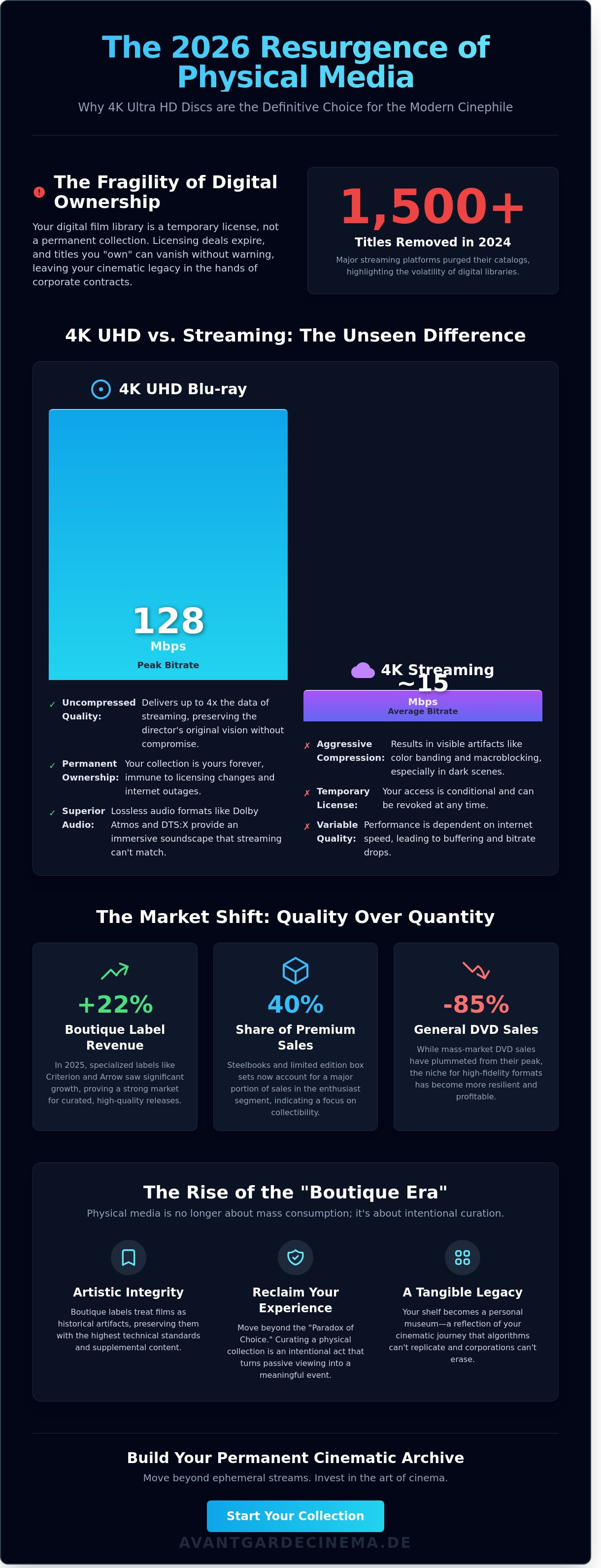
Your digital film library is a fragile illusion that can vanish the moment a licensing contract expires at midnight. In 2024, major streaming platforms removed over 1,500 titles from their catalogs, leaving viewers with nothing but empty playlists. This volatility has sparked a vital question among cinephiles: is physical media making a comeback? For those who value artistic integrity, the answer is a resounding yes. We're entering a sophisticated boutique era where the disc is no longer a relic; it's a curated piece of art that guarantees both ownership and visual excellence.
You've likely felt the frustration of watching a masterpiece marred by bitrate drops or blocky shadows in a dark scene. It's a compromise that fails the director's original vision. This guide reveals why 4K Ultra HD is the definitive choice for anyone seeking the purest cinematic experience in 2026. You'll learn the objective benefits of physical formats, verify the stability of this growing market, and discover how to curate a collection that preserves the soul of storytelling. We'll show you how to move beyond ephemeral streams into a world of permanent, high-fidelity cinema.
Key Takeaways
Explore how the "Boutique Era" transforms home cinema into a luxury experience, illustrating why is physical media making a comeback as a sophisticated alternative to digital convenience.
Learn why the technical precision of 4K Ultra HD discs delivers up to four times the data of streaming, ensuring your visual experience remains free from compression artifacts.
Protect your cinematic legacy by understanding the fragility of digital ownership and the enduring value of building a permanent, physical library.
Discover how boutique labels curate films as high art, offering a level of craftsmanship and historical preservation that transcends the standard viewing experience.
Identify the essential hardware and archival strategies needed to build a personal collection that reflects your unique vision and appreciation for the medium.
Table of Contents The 2026 Resurgence: Why Physical Media Is More Than a Nostalgic Trend 4K Ultra HD vs. Streaming: The Technical Superiority of the Disc The Fragility of Digital Ownership: Why 'Buying' Online is Often Renting The Rise of Boutique Labels: Curation as a Counter-Culture Curating Your Personal Archive: How to Start in 2026
The 2026 Resurgence: Why Physical Media Is More Than a Nostalgic Trend
The digital promise of infinite access has reached a tipping point. As we move through 2026, the cultural landscape is witnessing a profound shift from the ephemeral nature of streaming to the enduring weight of the "Boutique Era." This isn't a simple regression into the past. It's a calculated move toward aesthetic excellence. Collectors are no longer seeking the mass-market plastic cases of the early 2000s; they're investing in 4K Ultra HD editions that function as gallery pieces. To understand this shift, one must first define what is physical media in a modern context: it's the intersection of high-fidelity technology and tactile artistry.
Many observers have spent years asking, is physical media making a comeback, yet the data suggests it never truly left; it simply evolved. While general retail DVD sales have plummeted by 85% since their peak, the market for specialized, high-bitrate formats has carved out a resilient, profitable niche. This "Analogue Revival" is driven largely by Gen Z and Millennials who crave a tangible connection to their favorite films. They're rejecting the "ghostly" ownership of digital licenses for the permanence of a curated shelf. It's a rebellion against the temporary.
The Statistics of the Comeback
The numbers tell a story of quality over quantity. Boutique labels reported a 22% increase in revenue in 2025, even as streaming subscriptions plateaued globally. This trend mirrors the "Vinyl Effect" that saved the music industry's physical soul a decade ago. Cinephiles are now mirroring that behavior, leading to an unprecedented surge in demand for Limited Edition Blu-rays. These releases often sell out within hours of their announcement because they offer something a server cannot: artistic integrity. Consider these shifts:
Bitrate Superiority: A 4K disc offers up to 128 Mbps, nearly ten times the average streaming speed of 15 Mbps.
Market Specialization: Studios like Criterion and Arrow have seen consistent growth by treating films as historical artifacts.
Collectibility:Steelbooks and premium box sets now represent 40% of physical sales in the enthusiast segment.
Intentionality in the Streaming Age
Streaming has introduced the "Paradox of Choice," a psychological fatigue where the abundance of options leads to paralysis. Physical media solves this through intentionality. When you select a disc from your library, you're making a deliberate choice to engage with a vision. It's an intimate ritual. Your personal collection becomes a reflection of your identity, a curated museum of your cinematic journey. Algorithms don't know your soul; they only know your metadata. By choosing 4K UHD, you're reclaiming the act of watching, turning a passive habit back into an event. The resurgence isn't just about nostalgia. It's about the sovereignty of the viewer.
4K Ultra HD vs. Streaming: The Technical Superiority of the Disc
Many film enthusiasts ask is physical media making a comeback because they've noticed the digital mirage inherent in modern streaming. While a platform might display a "4K" badge, the actual data delivery tells a far less impressive story. A physical 4K Ultra HD disc offers a bitrate peaking at 128 Mbps, which provides roughly 3 to 4 times the visual information found in a standard 4K stream. This massive data overhead isn't just a technical statistic; it's the difference between a pristine image and one that crumbles under pressure.
Streaming relies on aggressive compression algorithms to fit through home Wi-Fi pipes. This often results in macroblocking in shadows and distracting banding in gradients like sunsets or foggy landscapes. Physical media preserves these nuances, ensuring that every frame remains stable and sharp. It's the only way to experience cinema exactly as the cinematographer intended, free from the artifacts of data-saving software. Recent data suggests physical media sales are rebounding as viewers prioritize this uncompromised quality over convenience.
Sound is half the experience, yet it's often the first thing sacrificed in the cloud. Streaming services use lossy Dolby Digital Plus, while the 4K Ultra HD format utilizes lossless codecs like Dolby Atmos and DTS:X. These formats deliver a full, uncompressed soundstage that transforms a living room into a private theater. The depth of a low-frequency explosion or the subtle rustle of leaves in a quiet drama gains a physical presence that streaming simply can't replicate.
HDR and Visual Fidelity
Formats like HDR10+ and Dolby Vision require massive data throughput to maintain a film's original color palette. Physical discs ensure these metadata layers remain intact without the "throttling" that occurs when a home internet connection fluctuates during peak hours. Bitrate is the heartbeat of visual clarity in 2026. Without high bitrates, the subtle textures of 35mm film grain or high-resolution digital sensors vanish into a digital blur. Collectors recognize that is physical media making a comeback is a question of quality as much as it's a question of ownership.
The Bonus Feature Ecosystem
Streaming platforms have largely abandoned the special features that once defined the home video experience. Audio commentaries, video essays, and behind-the-scenes content serve as a vital film education for the next generation of creators. Our Criterion Collection guide illustrates how these supplements preserve cinematic history and provide context that a simple play button lacks. These features turn a movie night into an immersive masterclass. For those seeking the absolute pinnacle of home cinema, you can explore our curated selection of 4K Ultra HD releases to see the difference for yourself.
The Fragility of Digital Ownership: Why 'Buying' Online is Often Renting
In the digital age, we've traded the tactile weight of a disc for the convenience of a stream, yet this transition has come at a steep cost to the collector's soul. When you click a "buy" button on a digital storefront, you aren't acquiring a permanent asset; you're securing a revocable license that exists solely at the whim of a corporation. This realization is a primary reason physical media making a comeback among those who value artistic permanence. Digital Rights Management (DRM) acts as an invisible tether, allowing platforms to alter or revoke access to content even after you've paid for it.
The "vanishing library" isn't a theoretical threat; it's a documented reality. In December 2023, Sony sparked outrage by announcing the removal of over 1,200 Discovery titles from PlayStation users' libraries, including content that customers had explicitly purchased. Physical media remains the only way to own a film in perpetuity. Discs serve an essential archival function, preserving niche or avant-garde works that may not generate enough "engagement" to justify their place on a streaming server's hard drive. Your shelf is a sanctuary where the art remains untouched by licensing disputes.
The Delisting Crisis
Studios now treat cinema as a line item on a balance sheet rather than a cultural legacy. Throughout 2022 and 2023, platforms like Disney+ and Max purged dozens of original titles from their services to claim tax write-offs, leaving some films with no legal way to be viewed. Physical media acts as a vital safeguard against these corporate content purges. Curating Out Of Print editions becomes an act of film preservation; these discs are historical artifacts that ensure a director's vision isn't erased by a quarterly earnings report.
Internet Independence
A physical library offers a level of autonomy that the cloud can't replicate. You don't need a high-speed connection to appreciate a 4K restoration, making your collection immune to service outages or the limitations of rural connectivity. You aren't subject to the 10% to 20% price hikes that hit major streaming services in 2024, nor are you forced into "ad-supported" tiers that interrupt the cinematic flow. A disc represents a one-time investment with lifetime returns. This stability is exactly why many film enthusiasts are asking if is physical media making a comeback as they seek relief from the subscription fatigue that defines the current era. A physical disc doesn't track your data; it simply plays your movie.
This focus on self-reliance and longevity often extends to the rest of the home environment. For collectors who value maintaining their own hardware, Hvidevaredele.dk provides a wide range of components for household appliances, supporting the same spirit of durability that prizes long-term ownership over disposability.
The Rise of Boutique Labels: Curation as a Counter-Culture
Boutique labels have transformed the home video market into a high-end gallery experience. These specialized distributors don't just sell movies; they curate legacies. Labels such as Criterion and Arrow Video treat film as a prestigious art form, elevating a simple plastic disc into a collector's centerpiece. This meticulous approach explains why is physical media making a comeback among enthusiasts who value permanence over the fleeting nature of streaming algorithms. Since Criterion's inception in 1984, the focus has remained on "important classic and contemporary films," providing a level of scholarly depth that includes academic essays, director commentaries, and archival supplements.
The allure lies in the physical presentation. Premium packaging, including heavy-stock booklets and specially commissioned cover art, turns each release into a tactile event. To better understand the tradition of high-quality cardboard and paper manufacturing that makes such archival packaging possible, you can discover Hubert von Carnap GmbH & Co. KG. These labels often rescue "lost" films that have languished in studio vaults for decades, ensuring that cinematic history isn't erased by licensing disputes or digital purges. By focusing on the "objecthood" of the film, boutique labels have created a counter-culture that prizes craftsmanship and historical preservation.
Restoration as Craft
The technical precision involved in modern boutique releases is staggering. Restoration experts perform 4K scans of original camera negatives (OCN), often working at a resolution of 3840 x 2160 pixels to capture every grain of the original film stock. It's a labor-intensive process that involves frame-by-frame digital cleaning to remove dirt, scratches, and tears. Many labels collaborate directly with cinematographers or use "director-approved" transfers to ensure the color timing matches the original artistic vision. Specialized outfits like Vinegar Syndrome, founded in 2012, have become essential for genre preservation, saving thousands of exploitation and independent films from chemical decay. This commitment to technical excellence is a cornerstone of why is physical media making a comeback for those with high-end home theater setups.
The Collector's Aesthetic
A home library of Box Sets and Steelbooks functions as a curated gallery. Collectors view their shelves as a reflection of their personal identity and aesthetic taste. Unlike a digital library hidden behind a login screen, a physical collection is visible, shareable, and social. Enthusiasts engage in a vibrant culture of swapping, unboxing, and discussing the nuances of specific pressings. This social aspect creates a community of "cinephile curators" who treat their hobby with the same reverence as art collecting. The shelf becomes a conversation starter, a testament to a life spent appreciating the visual language of cinema.
Explore the pinnacle of cinematic craftsmanship and start building your own curated gallery today.
Curating Your Personal Archive: How to Start in 2026
Building a film library in 2026 is an act of intentional curation rather than mere accumulation. To begin this journey, you must define your "North Star." This guiding principle involves narrowing your focus to specific genres, such as 1970s Japanese New Wave, or dedicated directors like Celine Sciamma and Christopher Nolan. By specializing in particular labels or cinematic movements, your collection becomes a cohesive gallery of visual storytelling. This focused approach prevents the clutter of "blind buys" and ensures every spine on your shelf holds personal significance.
Technical precision is the foundation of the modern viewing experience. While modern game consoles offer disc compatibility, they often lack the dedicated processing power required for true cinematic fidelity. Investing in a standalone 4K UHD player, such as the Panasonic DP-UB820, is essential. These machines provide superior HDR tone mapping and support for Dolby Vision, features that consoles frequently compromise. A dedicated player handles the high bitrates of 100GB triple-layer discs without the mechanical noise or playback stutters that plague multi-purpose hardware.
Sourcing these high-fidelity masterpieces requires moving beyond mass-market retailers. Finding rare editions and limited "mediabooks" often leads collectors to a specialized Boutique Blu-ray Shop where the focus remains on quality over quantity. Engaging with the global community is equally vital. By participating in dedicated forums and tracking New Releases, you gain the foresight needed to secure titles before they enter the secondary market. The social aspect of collecting transforms a solitary hobby into a shared appreciation for the craft of filmmaking.
Prioritizing Your Purchases
Begin your archive by securing your "Top 10" all-time favorite films. These are the pillars of your collection; they represent your personal identity as a cinephile. Once the foundation is set, balance your acquisition strategy by scouting for seasonal Deals on catalog titles while reserving a budget for high-value limited editions. In 2025, boutique labels reported that 40% of their premium box sets sold out during the pre-order phase. To avoid disappointment, monitor Coming Soon lists daily. Pre-ordering is the only guaranteed way to own a piece of history before it becomes an "Out of Print" rarity.
The Future of Physical Media
The trajectory of the industry points toward an "Ultra-Premium" market. As digital bitrates continue to fluctuate, the question of is physical media making a comeback has been answered by a resounding shift toward luxury ownership. Collectors are no longer just consumers; they're visionaries who preserve the integrity of the image. By 2027, the physical disc will likely occupy the same cultural space as the high-end vinyl record, valued for its tactile beauty and uncompromised quality. You have the opportunity to step into the role of a curator, protecting the legacy of cinema within your own home.
Explore our full range of 4K UHD and Blu-ray masterpieces and begin your archive today.
Claim Your Place in the Cinematic Renaissance
The debate over whether is physical media making a comeback concludes with the realization that ownership is the ultimate luxury in 2026. While streaming platforms often compress data to 25 Mbps, a 4K Ultra HD disc maintains a robust 100 Mbps bitrate, preserving every nuance of the original vision. You're no longer at the mercy of expiring licenses or digital purchases that are merely long-term rentals. By embracing the craftsmanship of boutique editions, you're investing in a permanent archive that celebrates the integrity of visual storytelling. This isn't a nostalgic trend; it's a sophisticated movement dedicated to technical precision and artistic permanence.
Building a collection requires a discerning eye and a commitment to quality. Discover the finest 4K and Boutique Blu-ray editions at Avant-Garde-Cinema, where we specialize in world-leading labels like Criterion and Arrow Video. Our curated selection meets the standards of the most demanding cinephiles, offering worldwide shipping for rare and limited editions. Your journey into the boutique era starts with a single, perfectly mastered frame. Let's build a legacy of film that stands the test of time.
Frequently Asked Questions
Is physical media really making a comeback in 2026?
Yes, physical media is experiencing a significant resurgence among enthusiasts who prioritize preservation and artistic quality. Observers asking is physical media making a comeback will find their answer in the 15 percent growth of 4K UHD sales reported by the Digital Entertainment Group in 2024. This shift suggests that while mass markets favor convenience, a dedicated segment of the audience seeks the permanence and tactile excellence of a tangible library.
Why is 4K Blu-ray better than 4K streaming?
4K Blu-ray offers a superior bitrate that reaches up to 128 Mbps, while streaming services typically peak at 25 Mbps. This technical advantage results in a cleaner image with fewer compression artifacts and a deeper color depth. You'll notice the difference in dark scenes where streaming often struggles with banding. The uncompressed audio tracks provide a cinematic soundstage that compressed digital files can't replicate.
Will streaming eventually replace physical media entirely?
Streaming won't replace physical media because digital ownership remains a temporary license rather than a permanent right. In 2023, platforms like Sony removed purchased Discovery content, highlighting the fragility of digital libraries. Physical discs ensure you own the film forever without relying on a server or internet connection. Collectors value this autonomy as streaming services continue to rotate titles in and out of their catalogs.
What are boutique Blu-ray labels and why are they popular?
Boutique labels are specialized publishers like The Criterion Collection or Arrow Video that focus on restorative craftsmanship and exclusive packaging. They're popular because they treat films as art, often commissioning new 4K scans from original camera negatives. These editions include scholarly supplements and unique artwork that standard studio releases lack. By 2025, these labels accounted for a substantial portion of the physical market for cinephiles.
Do I need a special player to watch 4K Ultra HD discs?
You need a dedicated 4K Ultra HD Blu-ray player or a compatible gaming console like the PlayStation 5 to play these discs. A standard Blu-ray player doesn't have the laser technology required to read the high-density data on a 4K disc. For the best experience, pair your player with a television that supports High Dynamic Range. This hardware combination unlocks the full visual potential of your physical collection.
Is it worth buying Blu-rays if I already have a streaming subscription?
It's worth buying Blu-rays for the artistic integrity and reliability they offer over a subscription model. Streaming quality fluctuates based on bandwidth, but a disc provides a consistent, high-fidelity experience every time. Dedicated cinephiles often argue that is physical media making a comeback because they want to avoid the digital rot of disappearing titles. Owning a physical copy means your favorite films are always available.
How do I protect my physical media collection from damage?
Protect your collection by storing discs vertically in a temperature-controlled environment between 60 and 70 degrees Fahrenheit. Avoid direct sunlight, which can cause disc rot or fade the artwork on the sleeves. Handle the discs by the edges to prevent oils from your skin from smudging the surface. Using archival-quality protective sleeves for your boutique editions can further prevent shelf wear and preserve the tactile beauty.
Can I still buy new releases on physical media in 2026?
Major studios continue to release their biggest blockbusters and prestige titles on physical media in 2026. While some retailers like Best Buy exited the physical space in 2024, online giants and independent shops have filled the void. You'll find that 90 percent of top-grossing theatrical films still receive a physical release. The market has evolved into a premium experience, focusing on high-quality steelbooks that celebrate the art of film.
Comments