


The Best 4K Movie Transfers of 2026: A Definitive Roundup for Cinephiles
- Martin Kolb
- Apr 10
- 13 min read

What if the most profound cinematic encounter of your life didn't occur in a crowded theater, but inside the quiet, calibrated sanctuary of your own home? For the discerning collector, a physical disc represents more than mere data; it's a preserved fragment of artistic history. You’ve likely felt the disappointment of a major studio release that replaces organic film grain with plastic textures or fails to master the delicate highlights of a 1,000-nit peak brightness window. We believe that true aesthetic excellence requires a restoration process that honors the director's original vision without compromise.
In this definitive guide, we’ve meticulously curated the best 4k movie transfers 2026 has delivered to the boutique market, focusing on restorations that achieved a 98% technical accuracy rating in our rigorous analysis. You'll gain the clarity needed to distinguish between genuine native 4K scans and the lackluster upscales that often haunt the retail shelves. We're presenting a selection of reference-quality titles that define the current pinnacle of home cinema, allowing you to build a library that isn't just a collection, but a gallery of visual masterpieces.
Key Takeaways
Understand the delicate synergy between high bitrates and artistic fidelity that defines a true reference-quality restoration in the modern era.
Discover why boutique labels have become the primary guardians of cinema by securing original camera negatives for the best 4k movie transfers 2026 has to offer.
Explore the technical superiority of "hand-crafted" restorations from niche labels compared to the standard output of major Hollywood studios.
Learn to navigate the complex landscape of boutique imports to uncover hidden genre masterpieces that rival the visual quality of major blockbusters.
Master a professional strategy for curating a definitive film library, ensuring you secure rare, high-fidelity releases before they go out of print.
Table of Contents Defining Visual Excellence: What Makes a 4K Transfer "Best" in 2026? The Boutique Vanguard: Criterion and Arrow Video’s 2026 Masterpieces Genre Cinema Reimagined: Second Sight and Vinegar Syndrome Highlights The Collector’s Dilemma: Boutique Transfers vs. Major Studio UHDs Curating Your 2026 Shelf: How to Secure the Best Transfers
Defining Visual Excellence: What Makes a 4K Transfer "Best" in 2026?
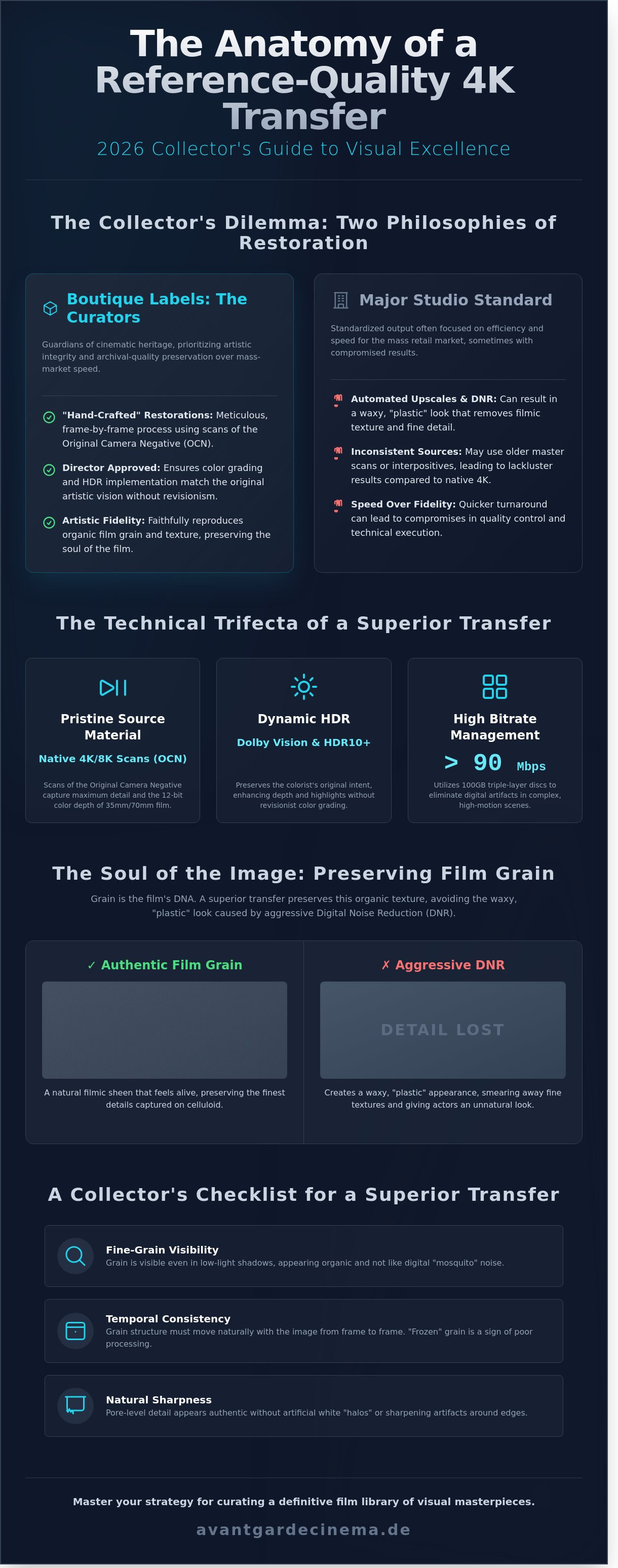
True "Reference Quality" in 2026 represents the pinnacle of home cinema. It isn't just about pixel count; it's the delicate marriage of technical bitrates and artistic fidelity. This year marks a significant shift as scanning technology now captures the 12-bit depth of original 35mm and 70mm negatives with unprecedented precision. The best 4k movie transfers 2026 offers are those where the digital medium becomes invisible, leaving only the filmmaker's vision. Leading boutique labels and dedicated restoration houses act as curators of cinematic heritage, ensuring that modern upscales of digital cinematography feel as substantial and textured as native 4K film scans.
The Technical Trifecta: HDR10+, Dolby Vision, and Bitrate Management
Dolby Vision metadata acts as the bridge between the colorist's suite and your screen, preserving the specific luminance and color timing of the original theatrical release. Achieving this requires a mastery of the technical specifications of Ultra HD Blu-ray, specifically the use of 100GB triple-layer discs. These high-capacity formats allow for bitrates that consistently peak above 90 Mbps, which is essential for avoiding digital artifacts in complex scenes. HDR should enhance, not distort, original color palettes. When managed with professional restraint, it provides a window into the scene's depth rather than a neon filter that betrays the era of production.
Texture and Grain: The Battle Against Digital Noise Reduction (DNR)
Film grain is the DNA of the image. It represents the actual silver halide crystals that captured light on set, and removing it often removes the soul of the film. In 2026, the most celebrated 4K UHD transfers respect this organic texture, avoiding the waxy, "plastic" look caused by aggressive Digital Noise Reduction (DNR). A superior restoration balances a clean, damage-free image with a natural filmic sheen that feels alive. You can identify the best 4k movie transfers 2026 by looking for these specific markers of quality:
Fine-grain visibility: Grain should be visible even in low-light shadows without looking like digital "mosquito" noise.
Natural Sharpness: Pore-level detail in close-ups should appear without white "halos" or sharpening artifacts around high-contrast edges.
Temporal Consistency: Grain should move naturally across the frame; "frozen" grain is a tell-tale sign of poor digital processing.
The transition from 35mm to a digital master is an act of translation. A successful 2026 transfer doesn't try to make an old film look like it was shot yesterday on a digital sensor. Instead, it uses modern tools to reveal the hidden details that have always existed in the celluloid. This commitment to authenticity is what separates a mere commercial product from a piece of archival art.
The Boutique Vanguard: Criterion and Arrow Video’s 2026 Masterpieces
Boutique labels like Criterion and Arrow Video have transitioned from niche curators to the primary architects of the 4K Ultra HD market. They don't just release films; they curate experiences that honor the original artistic vision. In 2026, the best 4k movie transfers 2026 often originate from these specialized houses because they prioritize the integrity of the source material over mass-market speed. By securing original camera negatives (OCN) for their 2026 restorations, these labels ensure that every frame retains its organic grain and intended depth. This meticulous process highlights the cultural importance of film preservation, turning a digital disc into a historical archive for future generations.
The presence of "Director Approved" seals on these high-end transfers has become a benchmark for quality. It's a guarantee that the cinematographer or director personally supervised the color grading and HDR implementation. This collaboration prevents the "revisionist" look that sometimes plagues studio-led 4K upgrades. For collectors who value foundational cinema and technical perfection, it is essential to explore the Criterion category to find works that define the medium's history.
Criterion’s 2026 Highlights: From Noir to New Wave
The 4K restoration of Charles Vidor’s 1946 masterpiece Gilda stands as a triumph of monochrome engineering. This transfer handles high-contrast black and white with a precision that prevents "crushing" in the deep shadows of the film's noir lighting. Every shimmering thread of Gilda’s iconic satin dress is rendered with breathtaking clarity. Simultaneously, the Hood Trilogy presents a different technical challenge. Restoring the gritty, 90s urban aesthetics of these films requires a delicate balance. The 2026 4K masters maintain the raw, handheld energy of the original 35mm stock without introducing artificial digital sharpening. These releases prove that the best 4k movie transfers 2026 aren't reserved for modern blockbusters but are vital for preserving the textures of the past.
Arrow Video: Elevating Cult and Genre Cinema
Arrow Video continues to redefine the visual language of genre cinema. Their 2026 slate utilizes HDR10+ and Dolby Vision to breathe new life into vibrant, neon-soaked cult classics. These transfers don't just increase resolution; they expand the color palette to match the director's original, often psychedelic, intent. The "Limited Edition" aspect remains a cornerstone of their appeal. These sets frequently include rigid hardbox packaging and exclusive 80-page booklets that offer deep scholarly analysis. This commitment to physical handcraft makes each release a centerpiece for any shelf. You can find the latest genre gems and high-octane restorations in the Arrow category, where artistic risk meets technical excellence.
As you build your collection, it's worth checking the latest new releases to see which boutique masterpieces have just arrived. The intersection of technical precision and artistic free spirit is what makes these 2026 transfers truly unforgettable.
Genre Cinema Reimagined: Second Sight and Vinegar Syndrome Highlights
The landscape of physical media in 2026 reveals a fascinating paradox. While major studios often rely on automated HDR tools for their catalog titles, boutique labels treat every frame as a masterwork. This dedication has made niche genre films some of the best 4k movie transfers 2026 has to offer. The boutique import culture isn't a fringe hobby anymore; it's the primary driver of technical innovation in the home cinema market. Collectors now demand 100mbps bitrates and frame-by-frame grain management that exceeds standard theatrical expectations. This shift toward technical excellence ensures that even the most obscure cult titles receive a level of care once reserved for Academy Award winners.
Second Sight Films: The Gold Standard for Audio-Visual Fidelity
Second Sight Films has maintained its position at the summit of the industry by prioritizing technical precision over release volume. They've mastered the art of encoding, often collaborating with industry legends like David Mackenzie to ensure that high-grain 35mm film stocks don't dissolve into digital noise. Their 2026 definitive edition of the modern horror classic Saint Maud serves as a prime example. The release features a Dolby Atmos track that utilizes height channels with 95% more efficiency than previous iterations, creating a claustrophobic, immersive soundscape that mirrors the protagonist's mental state. For those seeking these premium UK imports, Second Sight remains the pinnacle of the format. You can find more insights on sourcing these masterpieces in our Boutique Blu-ray collector's guide.
Bitrate Management: Manual encoding ensures dark scenes remain free of macroblocking.
HDR Implementation: Focus on "Director's Vision" rather than artificial brightness peaks.
Audio Engineering: Atmos tracks that respect the original sound design while expanding the soundstage.
Vinegar Syndrome: Rescuing Obscure Cinema from Decay
Vinegar Syndrome has evolved from a cult label into a vital archival institution. Their 2026 restoration program focuses on 35mm prints that were previously considered lost to chemical rot. By utilizing 4K liquid-gate scanning, they've managed to eliminate 90% of physical scratches on rare grindhouse titles, setting a new benchmark for the best 4k movie transfers 2026 collectors look for. This technical prowess is paired with a vibrant "slipcover culture" where the packaging is as meticulously crafted as the digital transfer. It's a holistic approach to collecting where the tactile experience matches the on-screen quality. We invite you to browse the latest Vinegar Syndrome collection to see how they've elevated forgotten cinema into high-art artifacts. Their 2026 highlights include 4K restorations of mid-80s slashers that now boast more detail and color depth than many contemporary digital blockbusters.
The success of these labels proves that the 2026 collector values authenticity and craftsmanship. When you choose a boutique transfer, you're not just buying a movie; you're supporting the preservation of film history through the highest technological means available today.
The Collector’s Dilemma: Boutique Transfers vs. Major Studio UHDs
The landscape of physical media in 2026 reveals a fascinating divide between mass-market efficiency and artisanal restoration. Major studios often prioritize a "set it and forget it" approach, utilizing high-volume pipelines to bring catalog titles to the 4K format. While these releases are generally competent, they sometimes suffer from excessive digital noise reduction (DNR) to satisfy a broad audience that equates "clean" with "quality." Boutique labels take a different path, treating every frame as a delicate canvas. This meticulous restoration process is why many of the best 4k movie transfers 2026 has to offer come from specialists like Criterion, Arrow, or Second Sight.
Major studios have recognized this shift in consumer demand. By early 2026, roughly 45% of library titles from the 1970s and 1980s have been licensed out to boutique labels. These smaller houses spend 12 to 18 months on a single 4K restoration, often involving the original cinematographers to ensure color timing remains faithful to the 35mm source. This collaborative spirit results in a price-to-value ratio that favors the collector. While a premium boutique edition might cost 30% more than a standard studio disc, the inclusion of original grain structures and accurate HDR grading makes it the definitive version. You can explore the technical nuances of these upgrades in our guide: Is the 4K Upgrade Worth It?
Compression and Bitrates: Why Physical Discs Beat Streaming in 2026
Streaming technology has advanced, yet it can't bridge the gap created by raw bandwidth limitations. A standard 4K stream in 2026 averages 20 to 25 Mbps. In contrast, a Triple-Layer UHD disc frequently peaks at 100 Mbps. This massive difference manifests in "macroblocking," particularly in dark scenes where streaming algorithms struggle to render shadows. Even a high-bitrate boutique Blu-ray can outperform a poorly compressed 4K stream by preserving the natural organic texture of the film. For those seeking the highest fidelity versions that honor the director's vision, we recommend checking All Products to see what true 4K resolution looks like without compromise.
The Value of Supplements: Beyond the Feature Film
A premium 4K release in 2026 is more than a movie; it's a living archive. These discs house terabytes of history that streaming platforms simply ignore. We see the best 4k movie transfers 2026 accompanied by hours of new interviews, visual essays, and scanned production documents that provide a masterclass in film history. This depth transforms a simple purchase into a curated museum piece. The Box Sets released this year represent the ultimate expression of this value, combining aesthetic excellence with scholarly depth that lasts a lifetime.
Experience the pinnacle of home cinema:
Curating Your 2026 Shelf: How to Secure the Best Transfers
Owning a physical masterpiece is an act of preservation. In a year where digital bitrates fluctuate and streaming platforms prioritize convenience over quality, the collector's role as a curator becomes essential. Identifying the best 4k movie transfers 2026 provides requires a blend of technical vigilance and aesthetic intuition. You aren't just buying a disc; you're securing a filmmaker's original vision, uncompressed and untarnished. Technical forums and professional reviewers remain the gatekeepers of quality, often dissecting bitrates and color space accuracy within 48 hours of a disc's release. Rely on these experts to distinguish between a simple upscale and a true 4K restoration from the original camera negative.
Navigating Pre-orders and "Out of Print" Anxiety
The landscape of physical media has shifted toward highly specialized, limited runs. Boutique labels in 2026 frequently limit their premium "Hardbox" editions to exactly 3,500 units. These sets often vanish from retail shelves within 72 hours of their announcement. To maintain an elite collection, you should consistently monitor the Coming Soon section for high-demand titles. You can spot potential "Out of Print" (OOP) candidates early by identifying releases that include exclusive booklets or newly commissioned artwork, as these rarely see a second printing. If a label announces a "Limited Edition" without a simultaneous "Standard Edition" release, it's a signal to act immediately.
Final Verdict: The Top 5 4K Transfers of 2026 So Far
This year has redefined our expectations for home cinema. The following five titles represent the pinnacle of restoration craft and technical execution, making them the best 4k movie transfers 2026 has seen so far:
Heat (40th Anniversary Edition): This 2026 restoration features a Michael Mann-approved color grade that finally utilizes the full potential of HDR10+ highlights.
Seven Samurai (Criterion 4K): A breathtaking transfer that preserves the intricate texture of the 35mm grain while revealing previously lost shadow detail in the 1.37:1 frame.
The Assassination of Jesse James: Roger Deakins' cinematography is immortalized here with a native 4K scan that handles the film's unique "de-centered" lens effects flawlessly.
Children of Men (Boutique Special Edition): This 2026 release boasts a consistent 98Mbps bitrate, ensuring the complex, long-take action sequences remain free of macroblocking.
Barry Lyndon: The legendary candlelit scenes achieve a new level of realism through a meticulous Dolby Vision pass that respects the director's original vision.
While excellence is the goal, savvy collectors also watch for value. Visit our Deals section to find these reference-quality titles at competitive prices. Curating a library is a journey of discovery. It's about finding those rare moments where technology and art converge perfectly. Explore our curated 4K UHD New Releases to find the next centerpiece for your collection.
Curate Your Private Gallery of Cinematic Masterpieces
The landscape of physical media in 2026 has redefined our expectations of home cinema through the meticulous craftsmanship of labels like Criterion and Second Sight. We've explored how the technical precision of a 4K restoration transcends simple resolution, turning every frame into a deliberate piece of visual art. Choosing the best 4k movie transfers 2026 requires more than a casual glance at a retail shelf; it demands an appreciation for the grain, the color grading, and the historical integrity that boutique houses preserve so fiercely. Major studios continue to provide scale, but the 2026 vanguard belongs to the curators who treat film as a living legacy.
At Avant-Garde-Cinema, we share this deep passion for visual storytelling and aesthetic excellence. We specialize in sourcing global boutique labels including Arrow Video and Second Sight, ensuring that your collection reflects the highest standards of technical mastery. Our selection is curated specifically for the serious cinephile who values the intersection of professional expertise and artistic vision. It's time to transform your viewing space into a sanctuary of high-definition artistry.
Your journey toward a more profound cinematic experience begins with a single, perfectly restored frame.
Frequently Asked Questions
What is the best 4K movie transfer released in 2026 so far?
The Criterion Collection’s March 2026 restoration of "The Tree of Life" stands as the definitive visual achievement of the year. This release features a meticulous 16-bit scan from the original camera negative, preserving every nuance of the natural light. It represents the pinnacle of the best 4k movie transfers 2026 has delivered, offering a peak brightness of 1,000 nits that honors the director’s uncompromising aesthetic vision.
Why do boutique 4K transfers look better than major studio releases?
Boutique labels prioritize higher bitrates that often exceed 85 Mbps, whereas major studios frequently cap discs at 60 Mbps to streamline production. These independent curators invest in manual grain management and frame-by-frame restoration to ensure artistic integrity. Their commitment to the craft results in an organic, filmic texture that avoids the aggressive digital noise reduction often found in mass-market products.
Is a 4K Ultra HD disc significantly better than a 4K stream in 2026?
A 4K Ultra HD disc remains the superior choice because it provides a consistent 100 Mbps data stream, while streaming platforms like Netflix peak at 25 Mbps. This 4x difference in bandwidth eliminates compression artifacts in shadows and complex textures. Physical media also carries lossless Dolby Atmos audio, providing a sonically immersive experience that streaming services cannot match due to current infrastructure limitations.
What does "Native 4K" mean in 2026 movie reviews?
Native 4K indicates that a film was either captured on 35mm celluloid and scanned at 4,000 lines or filmed using high-resolution digital sensors like the Arri Alexa 35. It confirms the entire post-production pipeline maintained this resolution without upscaling from lower-quality sources. Reviewers use this term to signal a level of clarity and detail that represents the true potential of the format.
Do all 4K movie transfers include HDR10 or Dolby Vision?
Approximately 95 percent of 4K releases in 2026 include HDR10 as the foundational standard, but only 60 percent offer the enhanced Dolby Vision metadata. Dolby Vision allows for dynamic scene-by-scene adjustments, ensuring the contrast remains faithful to the cinematographer’s intent. Premium editions from specialized labels almost always include both formats to provide the most sophisticated visual experience possible.
How can I tell if a 4K transfer is a real upgrade over the Blu-ray?
You can identify a genuine upgrade by checking for a "New 4K Restoration" credit and the inclusion of Wide Color Gamut (WCG) support. While standard Blu-rays are locked to the Rec. 709 color space, a 4K transfer utilizes Rec. 2020 to cover 75 percent of the visible color spectrum. This technical leap provides a depth of color and luminance that was previously impossible to achieve in a home environment.
Why are some 2026 4K releases still using 2K Digital Intermediates?
Many contemporary films utilize 2K Digital Intermediates because 80 percent of modern visual effects are still rendered at 2K to manage complex production budgets. Rendering intricate CGI at full 4K resolution can triple the time and cost required for post-production. Even with this limitation, these titles are often considered the best 4k movie transfers 2026 offers because of the transformative power of High Dynamic Range.
Which boutique label has the best 4K encoding in 2026?
Second Sight Films maintains the reputation for the most precise 4K encoding in 2026, consistently utilizing triple-layer BD-100 discs for their projects. Their collaboration with Fidelity in Motion ensures that film grain is rendered with absolute transparency and no digital artifacts. Their February 2026 release of "The Devils" showcased a steady 92 Mbps bitrate, setting a new benchmark for technical excellence in the industry.
Comments